Archive for January 2011

Upcoming bryology workshops

January 21, 2011

There are three upcoming bryological courses and excursions this spring! They’re not being held in our region, but many bryophytes are quite cosmopolitan so it’s likely that you’d encounter species that occur in New York. Certainly the lab skills and camaraderie would be worth the trip.

Intermediate Bryology will be offered by Dr. David Wagner on the University of Oregon campus on March 21-23. The objective of this workshop will be a fairly intensive practice using the contemporary keys pertinent to the area. Most of the time will be spent in the teaching lab, with an afternoon excursion on the first day for field experience. Time will be available for participants who bring personal collections to work on them under expert supervision. Tuition is $300. Contact Dr. Wagner for more information (541-344-3327 / davidwagner@mac.com).

The 16th Annual SO BE FREE foray will be held in the lower elevations of the northern Sierra Nevada Mountains near Quincy, California on March 23-26.  The area offers great sites for montane coniferous, mixed coniferous-hardwood forests; canyon oak forests; rocky outcrops; and chaparral, all in the steep North Fork of the Feather River canyon.  There will be flat trails and roadside areas to visit for easy access.  Bryophyte diversity will span from California’s spring ephemerals, bryophytes of springs, streamlets, and rivers to the great diversity found on rocky outcrops.  Beginning bryologists are welcome, and they are planning some special activities for beginners, as well as serious fieldtrips  that will be exciting for the hard-core. CLICK HERE for more info.

An Introduction to Bryophytes will be offered by Dr. Stephen Timme in the botany lab on the Pittsburg (Kansas) State University campus on April 2-3. It is designed to provide an introduction to basic characteristics and techniques for identification of some of the more common species found in the prairie, oak/hickory forests, and rock outcrops in the central U.S.  Techniques will include the proper use of the microscope, free-hand sections, terminology, and making semi-permanent mounts. The workshop will be topped off with a field trip. Contact Dr. Timme for more information (417-658-5473 / slt@pittstate.edu).

Invasive Gnomes Becoming a Problem

January 21, 2011

To stay in tune with the coming gnome movie (Gnomeo and Juliet) we found a video to help you control what may be a growing problem.  When it comes to invasives we all need some comic relief.- Steve Young


Botany Photo of the Day Website

January 19, 2011

The UBC Botanical Garden in Vancouver produces this website with plants from all over the world.  The accompanying text is sometimes pretty long so a lot of work goes into each entry.  CLICK HERE for the website.

Frazil Ice at Yosemite Video: Like the Hudson River at The Glen

January 18, 2011

Evelyn Greene sent a link to this video to show how frazil ice is formed in Yosemite. It is the same process that builds the ice we see on the ice meadows at The Glen on the Hudson River.  Evelyn has studied this phenomenon for years and how it affects the unique flora of the area.  You can visit the Hudson River north of Warrensburg up to North Creek to see our own version of this beautiful natural event.

Plant Trivia App for iPhone, iPod

January 18, 2011

The Plant Trivia app touts it as, “a simple game to help you learn 200 plant names and pictures. The game is pretty simple: You start with 60 seconds on the clock. Each correct answer is worth 5 points on the first try, 3 on the second, 2 on the third, and 0 on the last try. When you’re done, save your score and share the results on Facebook.”

Mostly flowers are shown but other plant parts as well.  Sometimes the choices are very different from each other. I did pretty well but my son still has the highest score.  I’m getting rusty or all those field trips with him have paid off! – Steve Young

A screen shot. What's the correct answer?

Public Very Interested in Smartphone Plant Identification Apps

January 13, 2011

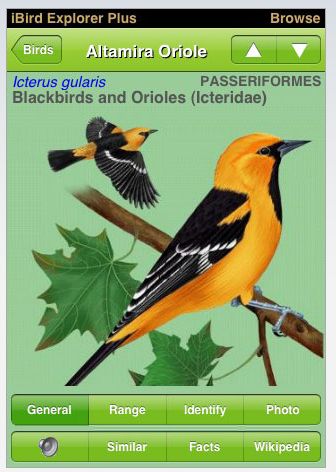
Last year I wrote a post about plant identification apps for the iPhone. Since then it has consistently been one of the top two most popular posts on this blog. That tells me that the public is very interested in having apps that help them identify the plants they are seeing in the wild but so far there have only been a handful of apps available and none that are very good. The latest one I have seen is a Apple app of a plant quiz (Plant Trivia) that is fun but includes plants from the whole world which can be challenging. The iBird app is an example of a very interesting one for birds that shows the usefulness of these apps. I think developers would do well to consult with some of our regional botanical experts to develop useful plant identification apps that the public can use to help them enjoy their local flora. Turning Newcomb’s Wildflower Guide into an app might be a good start. – Steve Young

The iBird App

Glimmer of Hope for Northeast Hemlocks

January 12, 2011

Northeast forest health managers are cautiously optimistic they might be along the path to protecting threatened Northeast hemlock populations. For the full news release CLICK HERE.

New Manual of Vascular Plants of Northeastern United States and Adjacent Canada

January 11, 2011

A website is now available for the New Manual of Vascular Plants of Northeastern United States and Adjacent Canada. Visit this website to find out more about this exciting project which is being organized by Rob Naczi of the New York Botanical Garden.

2011 NYFA ANNUAL MEETING ANNOUCEMENT

January 11, 2011

2011 NEW YORK FLORA ASSOCIATION ANNUAL MEETING

All are welcome to the 2011 NYFA annual meeting which will take place at the North East Natural History Conference (NENHC).

The 2011 meeting will feature a presentation entitled “New Manual of Vascular Plants of Northeastern United States and Adjacent Canada” by Rob Naczi of the New York Botanical Garden.

The most recent Flora for northeastern North America is Gleason & Cronquist’s Manual of Vascular Plants of Northeastern United States and Adjacent Canada (1991). Great advances in botany in the past two decades have made the time ripe for its revision. Particularly compelling justifications for revision are 1) improvements in understanding relationships among families and genera; 2) continued taxonomic discovery in the region at the specific and infraspecific level; and 3) field discoveries of an increasing number of non-native species that have become established in the region, including invasive plants. The goals of this project are to produce a compact, one-volume Manual intended for field use, similar to Gleason & Cronquist, as well as to create an accompanying online Flora. The online Flora will expand on the contents of the Manual by including discussions, photographs, citation of literature, etc. The region of coverage for the new Manual is the same as for Gleason & Cronquist, a vast area of northeastern North America: the entirety or portions of 22 states of the U.S.A. (CT, DE, IA, IL, IN, KY, MA, MD, ME, MI, MN, MO, NH, NJ, NY, OH, PA, RI, VA, VT, WI, WV) and 5 provinces of Canada (NB, NS, ON, PE, QU). The total area covered is ca. 860,500 mi2, which is equivalent to 29% of the area of the 48 contiguous states of the U.S.A. The botanical scope of the new Manual is the same as its predecessors: all vascular plants growing spontaneously and established in the geographic area covered. Included will be an estimated 5000 species and 200 families of vascular plants (ca. 25% of all North American species and ca. 65% of all North American families). Relative to Gleason & Cronquist, several innovations distinguish the new Manual, including collaboration by a team of taxonomic and floristic experts, and inclusion of etymologies of generic names and specific epithets, conservation status for each species, morphologic synapomorphies for families, and new identification tools.


In addition, find out more about what NYFA is doing including a review of the 2011 field trip and workshop schedule. There will also be time to mingle and talk with others interested in the flora of New York.

Don’t miss out on this exciting and interesting event!

When: Thursday April 7th 12 Noon – 1:30 PM

Where: At the NENHC at the Empire State Plaza Convention Center

Registration: Registrations for the meeting are being accepted through the NENHC registration form.

Cost: The meeting is free but registration for the NENHC is strongly encouraged.

Details: Lunches are offered through registration to the NENHC, or you can bring your own lunch.

The 21st Century Way to Survey for Aquatic Plants

January 11, 2011

Will this be the new way to get around lakes and ponds to spot that elusive pondweed? A sighting at Lake George can’t be far away.