By Gabriel Chapin, Land Steward with the Shawangunk Ridge Program of the Nature Conservancy
It’s springtime again high atop the Shawangunk Ridge at Sam’s Point Preserve and everywhere you look, signs of summer are beginning to appear. Birds are singing, hardwoods are leafing out and azaleas are in bloom. But somewhere between the fading shadbush blossoms and the peak of mountain laurel season, another annual event has been taking place at Sam’s Point…the pines are turning brown. For the past several years at Sam’s Point Preserve, the browning up of over a thousand acres of dwarf pines has become a regular sign of the changing seasons. But what is causing it? The answer, as it turns out, lies within.
Deep inside each and every brown needle, a tiny caterpillar is eating away in preparation for its metamorphosis into a small, nondescript moth know as Exoteleia pinifoliella, the pine needleminer. Despite its deceptively small appearance, the pine needleminer can cause extensive damage, particularly evident at Sam’s Point Preserve in May and even into early June. After hatching from an egg in mid summer, the needleminer, as its name would imply, enters a healthy needle as a small caterpillar and gradually “mines” its way through the center. After overwintering in its cozy “mine”, the hungry larva awakens to feed through the following spring, eventually emerging as an adult in June.
Unlike nearly all of our most famous and devastating forest pests, including the gypsy moth, chestnut blight, Dutch elm disease, and the hemlock wooly adelgid, the pine needleminer is a native forest pest of the northeastern US and parts of Canada. This somewhat finicky caterpillar dines exclusively on “hard” pines, or those having clusters of fewer than five needles, and is particularly fond of both pitch pine and jack pine. Despite the harsh appearance of acres upon acres of browned trees, the pines have adapted to tolerate needleminer damage and few trees actually die. Although more severe infestations may be cyclical—possibly lasting for several years—climate and natural predators generally keep needleminer populations in check. Even after a few years of infestation, the most significant impacts are generally limited to reduced tree growth and greater susceptibility to other more serious pests like bark beetles.
Chemical pesticides can be used to control the pine needleminer in some instances, however, natural predators and other controls usually do the job. Non-native insects and tree diseases, including those mentioned above, have few natural enemies when they arrive on a new continent and native tree species have no defenses to ward off the new invaders. Because of this, non-native pests often cause profound and long lasting ecological damage. Although an extreme case, the chestnut blight nearly wiped out the most dominant and widespread tree in the eastern US in 40 years.
In contrast, periodic infestations by native pests such as the needleminer are part of a natural cycle of disturbance in our native forests that includes, among other things, wildfires, ice storms and hurricanes. Forests in the northeast have adapted to survive or recover from these “native” disturbances and, in some cases, forests may even depend on periodic disturbances like wildfire to maintain their health and vigor.
However, as we move into the 21st Century, global climate change may jeopardize this delicate ecological balance that has evolved over time. Some of the more obvious impacts of climate change—melting glaciers and the like—often mask more subtle changes, including increased wildfire activity and possibly even stronger hurricanes. Subtler still, warmer temperatures are contributing to widespread infestations of forest insects, including spruce bark beetles that have wiped out 4 million acres of spruce trees on Alaska’s Kenai Peninsula. Although naturally more lethal, the native spruce beetle was once limited by the very same factors hold the pine needleminer at bay.
The lesson that we repeatedly learn is that nature is a delicate balance of forces where subtle changes can combine to have profound cumulative impacts. Although the needleminer may not be a significant threat today, continued disruption of other natural process such as climate and wildfire may exacerbate the impacts of this seemingly benign moth. Maintaining the natural processes that keep forests healthy and resilient is the key to preserving our globally rare and treasured pitch pine forests in the Shawangunks.


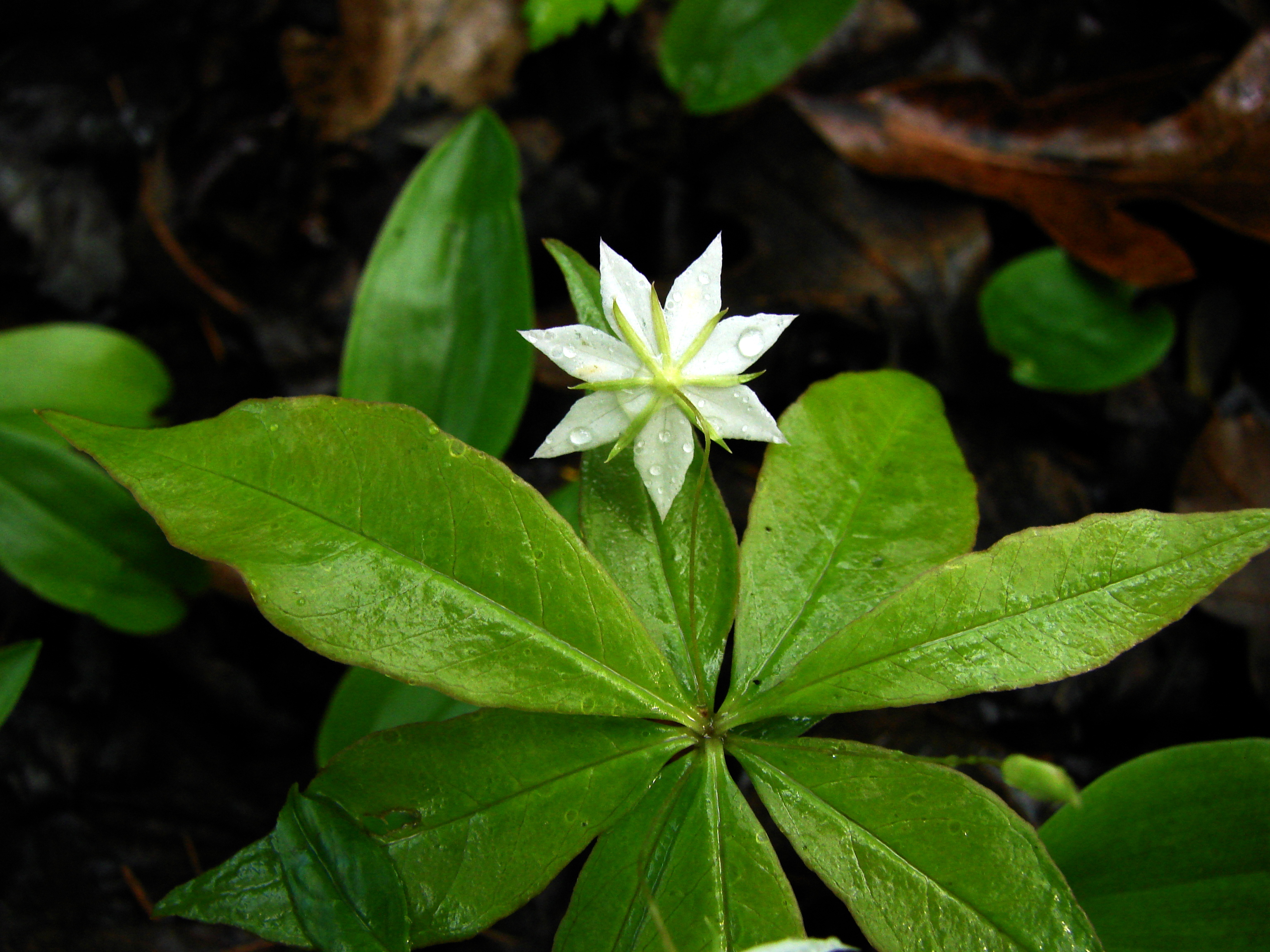

 Some progress was made but we are re-thinking our strategy and making plans to return, perhaps to try another method. In the photos below, you can see a few trout lilies managing to flower among the daylilies.


 The Preserve is owned and managed by the Nature Sanctuary Society of Western New York, which restricts visitation to the Preserve in order to protect it’s vulnerable and precious resources. This day will offer volunteers a rare opportunity to visit this beautiful area and contribute to it’s protection. Expect to see a large stand of bluebells (Mertensia virginica) and other spring flowers and incredible geology including mass wasting on a scale not often seen! If you would like to join the group, please call Jon and Priscilla Titus at 716-679-4509 or Priscilla’s cell at 716-969-0800 before 8:30 AM on Saturday April 25th for directions to the site, or meet us in the SUNY-Fredonia Jewitt Hall Parking lot at 9:55 AM on Saturday to carpool to the site.


 New York Flora Association Blog