While browsing the website Parasite of the Day, I came across an interesting article about dodder and a reference about how they key on odors or chemical signals of some plants to find a host. Here is a detailed entry about it in the Why Files Blog. This species is considered uncommon in New York and there are four other species that are endangered and threatened in the state. To find out more about two of them, you can go to the NY Natural Heritage Program Plant Conservation Guides.
Archive for the ‘Natural History’ category
Dodder (Cuscuta pentagona) Exploits Odors to Find its Host
February 17, 2011Frazil Ice at Yosemite Video: Like the Hudson River at The Glen
January 18, 2011Evelyn Greene sent a link to this video to show how frazil ice is formed in Yosemite. It is the same process that builds the ice we see on the ice meadows at The Glen on the Hudson River. Evelyn has studied this phenomenon for years and how it affects the unique flora of the area. You can visit the Hudson River north of Warrensburg up to North Creek to see our own version of this beautiful natural event.
Keep Your Eye out for Rare Bumblebees
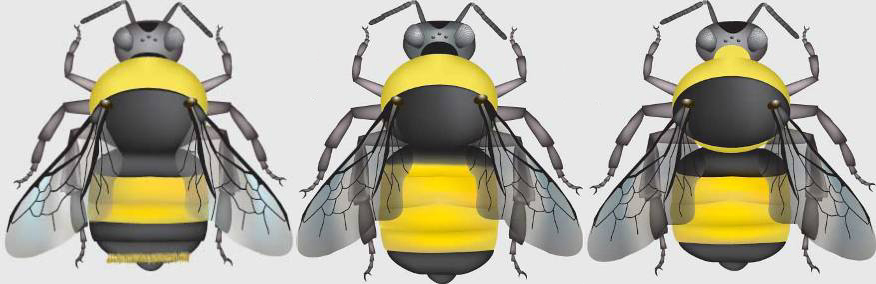
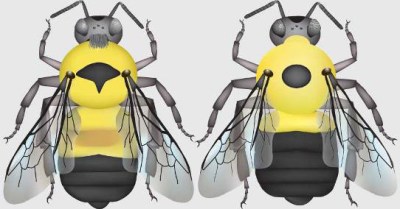
May 20, 2010Since we are out observing and photographing wildflowers all the time, our friends over on the zoology side of the Natural Heritage Program are asking us to keep our eyes out for a couple of bumblebees which might be in severe decline. On February 10, 2010, a broad coalition of scientists submitted a letter to the USDA’s Animal and Plant Health Inspection Service (APHIS) requesting that they create new regulations to protect wild bumble bees from threats posed by commercial bumble bees. The letter was signed by over 60 scientists with research on bumble bees and other bees. A recent status review by Dr. Robbin Thorp and The Xerces Society established that at least four species of formerly common North American bumble bees have experienced steep declines; two of those species teeter on the brink of extinction. A major threat to the survival of these wild bees is the spread of diseases from commercially produced bees that are transported throughout the country. The two in our area are the yellow banded bumble bee and the rusty patched bumble bee. Fact sheets about these bumblebees can be found at the following website: http://www.xerces.org/bumblebees/

Rusty Patched Bumble Bee
Rails to Trails And The Need for Botanical Surveys.
January 29, 2010The link below shows the need for complete botanical surveys when old railroads are converted to trails for the public. The article is by Steve Daniel who has had experience with a trail conversion near Rochester. The article also appeared in a recent issue of the NYFA News – Steve Young
http://www.saveauburntrail.org/home/not-an-ordinary-rail-bed
A New Take on Tree Leaves
November 19, 2009See the following article on the biodiversity of leaves from another angle.
http://niemann.blogs.nytimes.com/2009/11/17/bio-diversity/?hp
DEC Launches New York Nature Explorer
October 22, 2009What animals, plants and significant habitats are found in your county, town, and neighborhood? What places in New York are home to the American dragonhead, the black-throated blue warbler, Virginia pine, or riverside ice meadows?
Anyone with an interest in the natural history of New York State can now find the answers to these questions with New York Nature Explorer – http://www.dec.ny.gov/animals/57844.html – a new online tool launched by the New York State Department of Environmental Conservation (DEC). New York Nature Explorer is an interactive gateway to biodiversity information that can be utilized by residents, landowners, land managers, municipal officials, planners, consultants, students, and anyone else interested in researching the natural world.
DEC maintains many databases holding documented locations of plants, animals, and habitats, and, increasingly, much of this biodiversity information is being made available on the DEC public web site. Through New York Nature Explorer, users can learn about birds from the 2nd New York State Breeding Bird Atlas (2000-2005); reptiles and amphibians from the state Amphibian and Reptile Atlas Project (1990-1999); and rare animals, rare plants, and significant natural communities from the databases of the New York Natural Heritage Program. While not all information on animals and plants are currently available, DEC plans to add more databases over time.
Users can look up information by choosing a county, town, watershed, a defined area, or a particular species. Then, Nature Explorer provides geographic information in both map and list form about the animals, plants, and significant natural communities such as wetlands, forests, grasslands, ponds, and streams. Other information can also be easily obtained, including links to fact sheets about a particular species, and whether it is considered rare, threatened, or endangered. For sensitive species, including animals that are state or federally listed as endangered or threatened, location information will show only the counties and watersheds where the plant or animal is found.
The information available on New York Nature Explorer can:
• Help provide a better understanding of the diversity of life in the state and local communities.
• Serve as a resource to better inform land use decisions, natural resource management, biodiversity conservation, and environmental assessment.
• Offer an initial indication of possible rare and protected animals and plants for those involved in the planning or permitting of a project or action.
New York Nature Explorer was developed in part with funding from the U.S. Environmental Protection Agency, NYS Biodiversity Research Institute, and contributions to Return a Gift to Wildlife (RAGTW). RAGTW is a law established to help provide additional funds to enhance DEC’s fish and wildlife programs. It’s a voluntary contribution line on the state income tax form to provide taxpayers with an easy, simple way to support fish and wildlife conservation.
Double-spiked Narrow-leaf Cattail
August 21, 2009From Steve Young – When we were in Catskill Marsh last week we came across many examples of narrow-leaf cattail with double spikes that joined together to form the gap you see in the photo below (sorry for the bad focus).
I had never seen this before and would like to know if anyone else has seen it. If you have you may leave a comment below.

Double-spike cattail
New York Times Featured NYFA Board Member Gerry Moore
August 3, 2009There is a series of three article where Gerry Moore, botanist at the Brooklyn Botanic Garden and NYFA board member, answered questions about the flora of New York City. See the questions and answers starting here. The series was discontinued after the three installments.
New York State DOT Website on Dangerous Plants
July 10, 2009The New York State Department of Transportation now has a website featuring plants that can be dangerous to touch or with dangerous sap. There is information about the plants along with photographs. Access the site at: https://www.nysdot.gov/display/programs/dangerous-plants
Reviving the American Chestnut May Help Climate Change: Purdue Study
June 19, 2009See the progress Purdue University is having on reviving the American chestnut. Click here.