Archive for the ‘Publications, Apps, and Websites’ category

2010 Blog Stats in Review

January 2, 2011

The stats helper monkeys at WordPress.com mulled over how this blog did in 2010, and here’s a high level summary of its overall blog health:

Healthy blog!

The Blog-Health-o-Meter™ reads Wow.

Crunchy numbers

Featured image

The average container ship can carry about 4,500 containers. This blog was viewed about 16,000 times in 2010. If each view were a shipping container, your blog would have filled about 4 fully loaded ships.

In 2010, there were 126 new posts, growing the total archive of this blog to 234 posts. There were 175 pictures uploaded, taking up a total of 330mb. That’s about 3 pictures per week.

The busiest day of the year was June 24th with 377 views. The most popular post that day was Ecoregions of New York Map Available for GIS.

Where did they come from?

The top referring sites in 2010 were nyflora.org, blogger.com, newyork.plantatlas.usf.edu, watershedpost.com, and facebook.com.

Some visitors came searching, mostly for plant identification app, iphone app plant identification, ipad handwriting recognition, fungi, and ny flora blog.

Attractions in 2010

These are the posts and pages that got the most views in 2010.

1

Ecoregions of New York Map Available for GIS June 2010

2

New Plant ID Apps for the iPhone and iPad March 2010
1 Like on WordPress.com,

3

iPad and Handwriting Recognition App for Plant Listing in the Field June 2010

4

Searching for Downy Wood-mint September 2009

5

CCE Emerald Ash Borer Outreach Training Workshops March 2010
7 comments

Minnesota Wildflowers Website A Good Resource For New York Too.

December 31, 2010

The Minnesota Wildflowers website, http://www.minnesotawildflowers.info/page/home, has many beautiful photos and lots of information about wildflowers that also occur in New York. You just may find that missing photo to help you identify a plant you discovered in New York.

Ancestral Plants. A new book by Arthur Haines

December 25, 2010

Anaskimin has just published a new book by Arthur Haines entitled Ancestral Plants. A Primitive Skills Guide to Important Edible, Medicinal, and Useful Plants of the Northeast. Volume 1. For more information see this flier.

New York Flora Atlas Statistics

December 23, 2010

Here are some important indices for the Atlas that are kept up-to-date in real-time.

Number of Plant Species               3,895

Number of Plant Images                1,698

Number of Herbarium Records  105,275

See the sidebar link to go to the Atlas.


Support the Long Island Plant Atlas!

December 17, 2010

The Long Island Botanical Society is raising funds to publish their Atlas of Vascular Plants of Long Island. If you would like to help, the contribution form is below.  Click on it for a larger image.

Database of Vascular Plants of Canada Released

December 14, 2010

Canadensys announces the release of VASCAN, the Database of Vascular Plants of Canada, a comprehensive list of all vascular plants reported in Canada, Greenland (Denmark) and Saint Pierre and Miquelon (France).

http://data.canadensys.net/vascan/

Canadensys is a Canada-wide effort to unlock the biodiversity information held in biological collections. The network currently includes biological collections from 11 participating universities, five botanical gardens, and two museums, covering insects, fungi and plants. The network is operated from the Biodiversity Centre, Université de Montréal.

The goal of VASCAN is to provide an up-to-date, documented source of the names of vascular plants in Canada, Greenland, and Saint Pierre and Miquelon, both scientific and vernacular. For every species, subspecies and variety, VASCAN provides the accepted scientific name (Latin), the accepted French and English vernacular names, and their synonyms/alternatives in Canada. The distribution status (native, introduced, etc.) of the plant for each province or territory, and the habit (tree, shrub, herb or vine) of the plant in Canada are given. Maps at the provincial/territorial level are provided with an indication of status. For reported hybrids (nothotaxa or hybrid formulas), the parents also are provided. A source is given for each name, classification and distribution information (still being completed).
All taxa are linked to a classification. The following were used: Smith et al. (2006) for ferns, APG III (2009) for flowering plants, and Chase and Reveal (2009) for the higher taxonomy.

It is possible to generate lists in VASCAN using the Checklist builder tool. Data can be downloaded from VASCAN under the Creative Commons (BY-NC) license.

The Future of New York’s Forests – a 2010 Report From The Nature Conservancy

November 6, 2010

The report indicates that nearly one third of New York’s forests may not
have sufficient regeneration to replace the forest in the future. This will have a profound influence on the wildlife that depend upon these forests. Timber companies will also be affected as they rely on high quality commercial tree species like sugar maple and white oak to meet sustainable timber harvesting goals.  For a link to the full report CLICK HERE.

Is this the cause of lower forest regeneration?

Newsletter and Program Titles from Long Island and the Finger Lakes

October 25, 2010

Long Island Botanical Society Newsletter Fall 2010

A Dodonaea-like Capsule from the Upper Cretaceous of Long Island – Andy Greller
Plant Sightings – Eric Lamont
Request for Seed Collection Assistance for the Long Island Native Grass Initiative – Polly Weigand

Upcoming Programs
November 9 – Dave Taft on Discovering and Documenting Orchids.
December 14 – Members Night

To join the Society and obtain more details go to: www.libotanical.org

Finger Lakes Native Plant Society Newsletter Fall 2010

Finger Lakes Lichens – Robert Dirig
Seeking Individuals to Assist with the Plant Society Website.
Name That Plant Contest.
Chicory with White Flowers – Tom Kozlowski
Pokeweed – Gin Mistry

Upcoming Programs
November 14 – Fall tree identification – Anna Stalter
November 18 – fungi and wildflowers – Kathie Hodge
January 19 – bird friendly gardening – Marie Read
February 16 – origins of American ethnobotanical medicine – Elroy Rodriguez

To join the Society and obtain more details go to: www.fingerlakesnativeplantsociety

What To Do With Too Many White-tailed Deer? A New Publication.

October 18, 2010

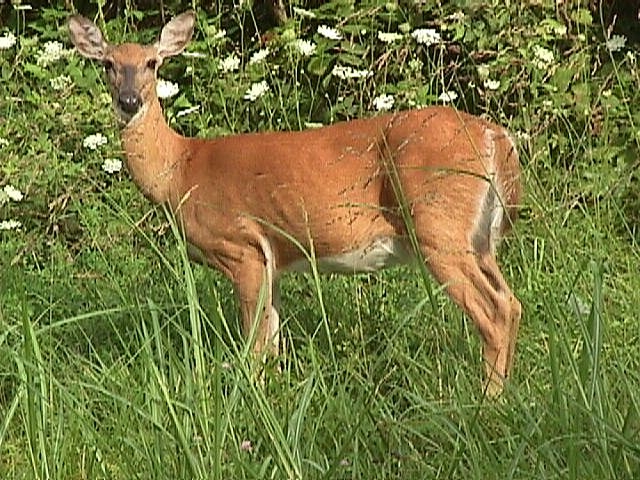
This is an article written by Thomas P. Rooney in ActionBioscience, “What Do We Do with Too Many White-tailed Deer?”
It is a succinct and current overview of the deer overabundance problem – required reading for anyone working to mitigate negative deer impacts. The article provides useful statistics and links to major repositories of deer info.

CLICK HERE for the article.

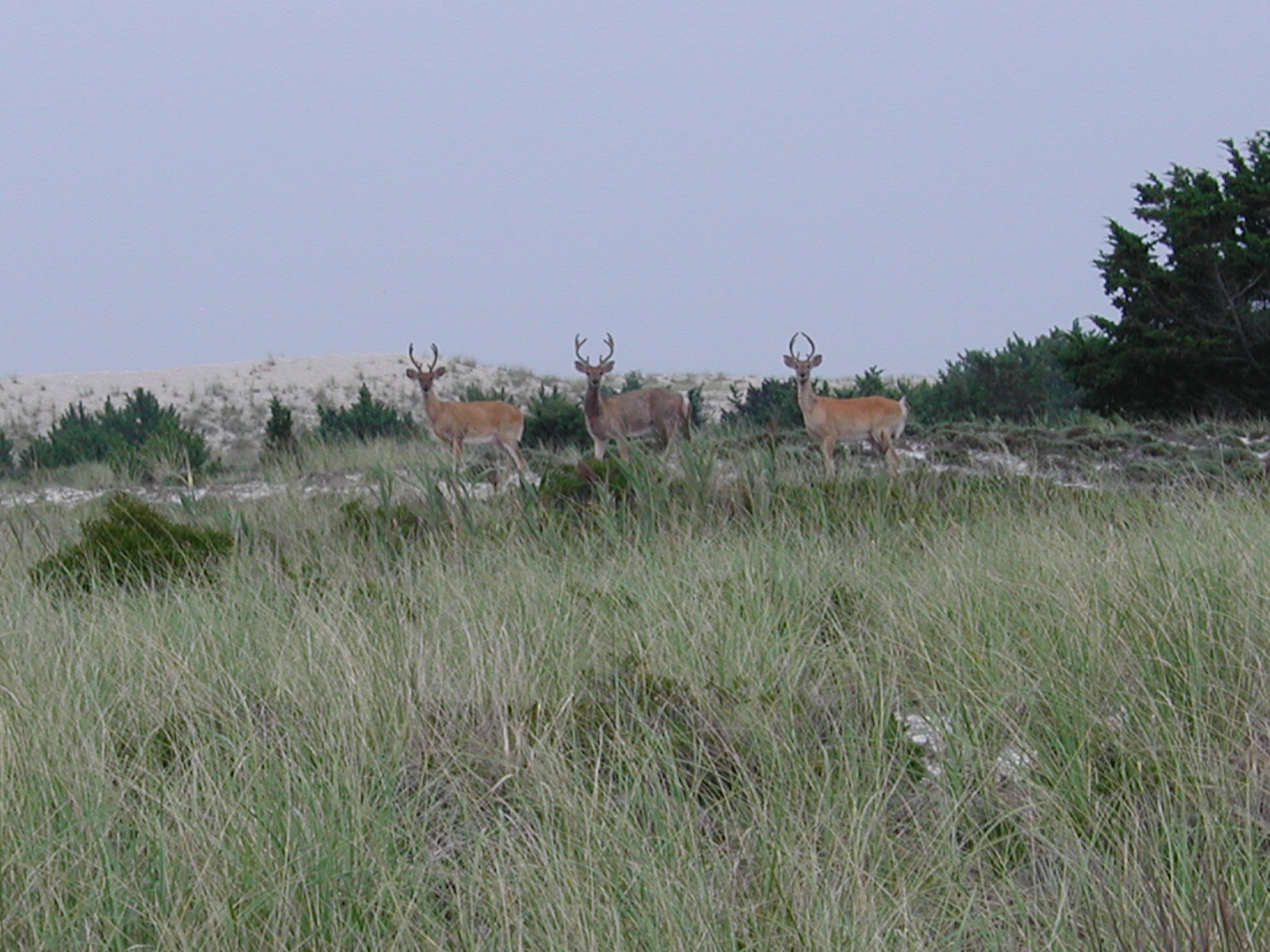
Deer on the dunes. Fire Island. Photo Steve Young.

Center for Plant Conservation Reintroduction Registry

September 21, 2010

In October of 2009 the Center for Plant Conservation hosted a conference on evaluating plant reintroductions.  As a result they established a Reintroduction Registry to enter and view projects that have reintroduced native plants into known or new habitats.  There is an example of one New York State orchid, Prairie Fringed Orchid, Platanthera leucophaea, that was reintroduced into a restored prairie.  Maybe you have an example of a plant reintroduction that you could share with others on this site.