The Mysterious Plantmaps.com

Posted May 6, 2011 by nyflora
Categories: Publications, Apps, and Websites

This is a website which displays maps for hardiness zones and range maps for selected plants. Unfortunately they don’t have any information about who they are and what information they use to produce their maps. If anyone can find more information about this website please post a comment. – Steve Young

CLICK HERE to see the website.

Adirondack Botany Courses Offered by Shingle Shanty Preserve

Posted May 3, 2011 by nyflora
Categories: Classes and Workshops

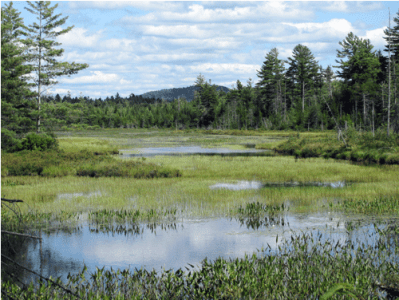
Shingle Shanty Preserve and Research Station, near Tupper Lake,  is accredited by the New York State Department of Education and is offering these exciting courses this summer.

Ecology of Mosses and Liverworts
Instructor: Sean Robinson
June 27th through July 1st, 2011

Adirondack Wetland Plants and Plant Communities
Instructor: Jerry Jenkins
August 11th – 15th, 2011

Fantastic Fungi of the Adirondacks
Instructor: Rick Van de Poll, Ph.D.
August 16th – 19th, 2011

For details about the courses and costs CLICK HERE.

Study here!

Northeast Conservation Status Report April 2011

Posted May 3, 2011 by nyflora
Categories: Publications, Apps, and Websites

From their website: The Nature Conservancy’s Eastern Conservation Science office, with funding from the Northeast Association of Fish and Wildlife Agencies, is pleased to release a benchmark report summarizing the results of a comprehensive three-year assessment of animal species and natural habitats across the Northeast and Mid-Atlantic region.

In an effort to evaluate the gains of a century of conservation and take the pulse of the natural world, scientists synthesized information from over 30 sources, including State Natural Heritage Programs, US Forest Inventory and Analysis, the Breeding Bird Survey, State Wildlife Action Plans and the Conservancy’s Regional Science Center.

Based on the recommendations of the Northeast Performance and Indicator Framework, this technical report evaluates key indicators for six natural habitats: forest, wetlands, rivers and stream, unique habitats, lakes and ponds and animal species of concern.  For the report CLICK HERE.

When will there be a Northeast Association of Botanical Agencies to fund the same studies on plant species of concern?
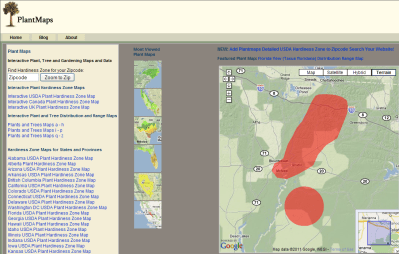
Photo Show: Every Tree Tells a Story

Posted May 2, 2011 by nyflora
Categories: Natural History, Publications, Apps, and Websites

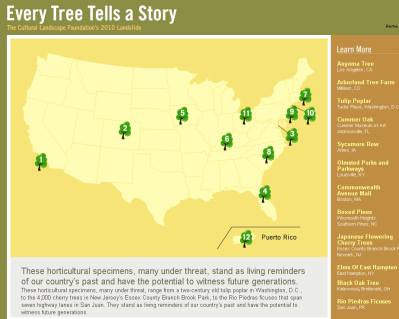
The Cultural Landscape Foundation presents: Every Tree Tells a Story featuring extraordinary trees and tree groupings at twelve sites around the country and Puerto Rico. The show includes a history of the elms of East Hampton, New York.  For the website CLICK HERE.

Adirondack Wild Edible Plant Workshops

Posted May 2, 2011 by nyflora
Categories: Classes and Workshops

The Adirondack Green Circle is hosting a series of Adirondack Wild Edible Plant workshops with Pat Banker at Heaven Hill Farm in Lake Placid.

The first one is May 30, 2011 at 2pm.

Contact Gail Brill for more information (gailbrilldesign@gmail.com)

NYFA Upcoming Workshops for Salix and Botrychium. Register Now!

Posted April 28, 2011 by nyflora
Categories: Classes and Workshops

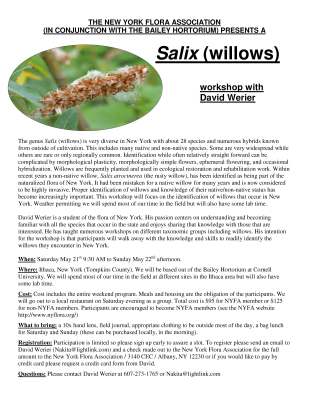
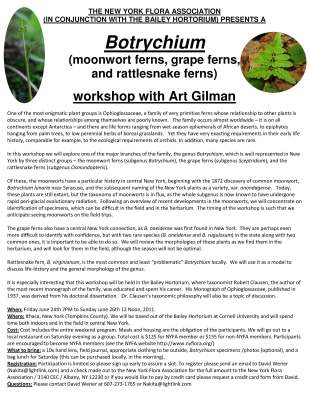
Two upcoming exciting workshop being offered by the New York Flora Association in conjunction with the Bailey Hortorium are listed below.  Click on the fliers for a larger version.

May 21-22 (Saturday and Sunday), 2011, Salix (willow) workshop based out of Ithaca (Tompkins Co.), led by David Werier. Co-sponsored with the Bailey Hortorium, Cornell University.


June 24-26 (Friday-Sunday), 2011, Botrychium (grape fern and moonworts) workshop based out of Ithaca (Tompkins Co.), led by Art Gilman. Co-sponsored with the Bailey Hortorium, Cornell University.


How to Identify Lesser Celandine, An Invasive Exotic Plant

Posted April 26, 2011 by nyflora
Categories: Plant Identification

This invasive plant can take over a floodplain understory and although the yellow masses of flowers may look pretty, it should be removed if possible. It is blooming now (late April and early May) so keep a lookout for it.

http://www.youtube.com/watch?v=TjWhgNVjQQg

Everything You Wanted to Know About Duckweeds

Posted April 26, 2011 by nyflora
Categories: Publications, Apps, and Websites

Wayne Armstrong from Palomar College has assembled a very information-rich website on the taxonomy of the Lemnaceae. There are lots of photos and keys to use to key out this sometimes difficult group.  To access the website CLICK HERE.

Here is an example of a photo page for Lemna minor

NY Capital District Friday Field Group Schedule Available

Posted April 19, 2011 by nyflora
Categories: Field Trips

The Capital District Friday Field Group just released their schedule for the 2011 field season. The group meets every Friday at 5:30 PM at a location in the Capital District of New York to learn the flora and fauna of the area. The group is also on meetup.com if you would like to register there. For a copy of the schedule CLICK HERE. See you in the field!

The first trip will be April 29th to Joralemon Park in Coeymans to see the early spring flora. If you don't know what this flower is come to the walk to find out.

Pixies: A Sure Sign of Spring on Long Island

Posted April 16, 2011 by nyflora
Categories: Plant Identification, Plant Sightings

Entry and photos by Steve Young.

Mid-April is the flowering time of the rare Pixiemoss, Pyxidanthera barbulata. In New York there are only two locations, on Long Island, but only one of them has a significant number of plants. This tiny plant grows in low clumps on the ground in open grassland areas of pitch pine-oak woods.  It is in the Diapensia family with a close relative, Diapensia lapponica var. lapponica, that grows in the alpine areas of the Adirondacks. Long Island is at the northern edge of the range of Pyxidanthera, a coastal plant ranging from Long Island south to South Carolina, except for Maryland and Delaware. The Adirondacks and White Mountains are at the southern range of the mostly Canadian plant Diapensia. Close cousins that will never meet!

Click on the photos below for a larger version.

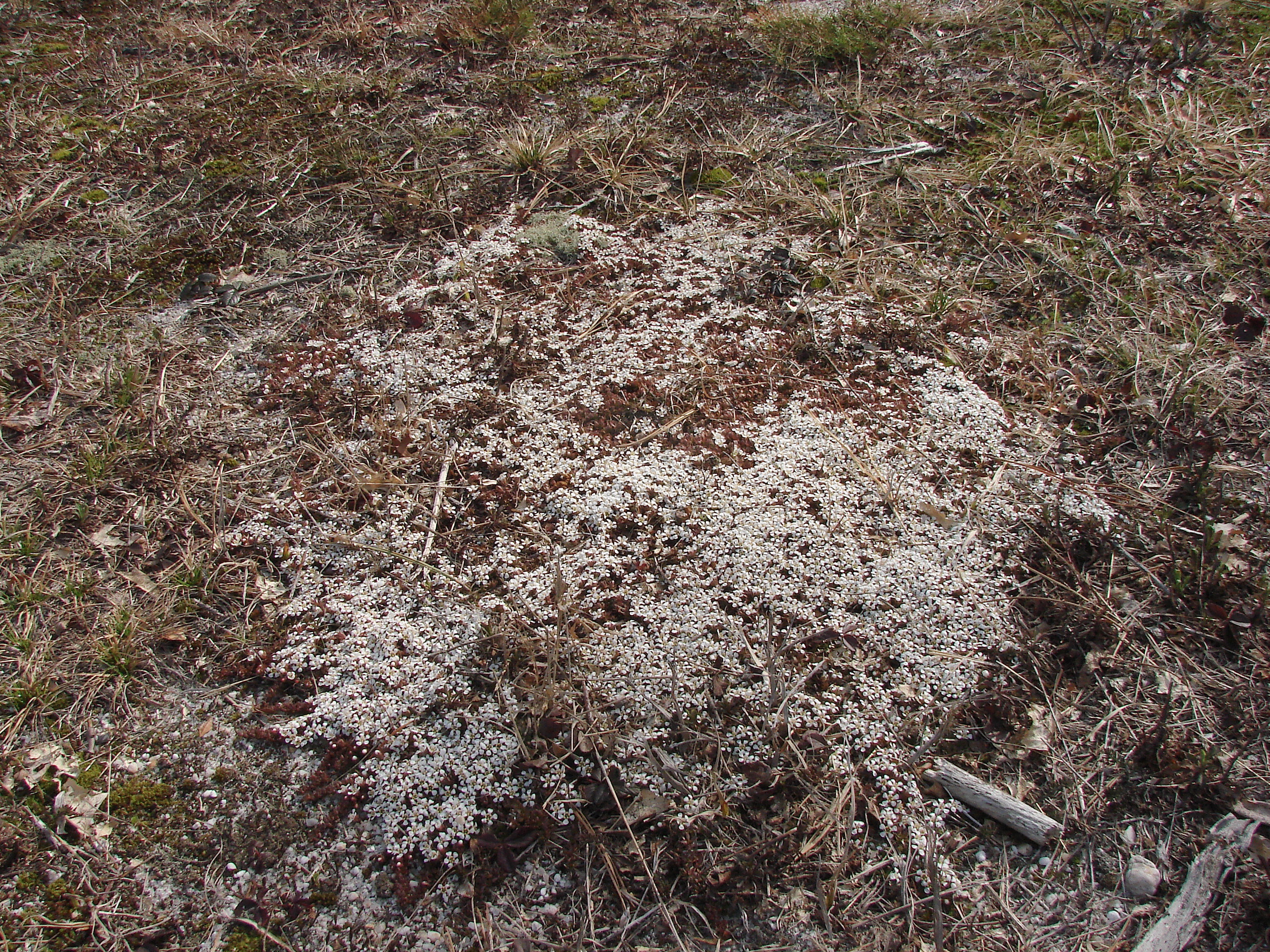
In its habitat a clump of Pixies could be mistaken for an open area of white pebbles or even a small mound of snow.

Here is a closer view of a clump of the tightly-packed white flowers.

You can see how small the flowers are here but there are a lot of them.

Diapensia flowers are on flower stalks but Pixie flowers are sessile and close to the ground. Their flat anthers have two parallel anther sacs on top.

These plants are in bud and show the tiny moss-like leaves that are widest above the middle and have a sharp tip. Without flowers or fruits they could be mistaken for a clump of moss.