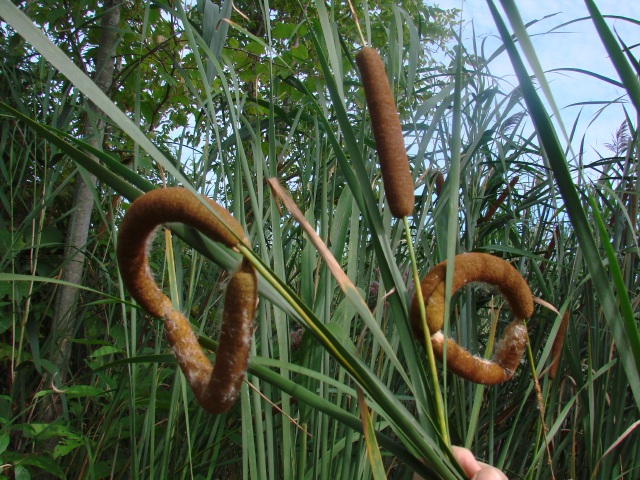
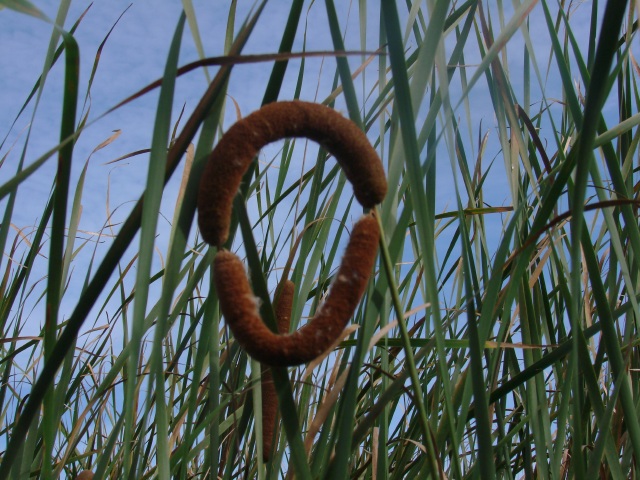
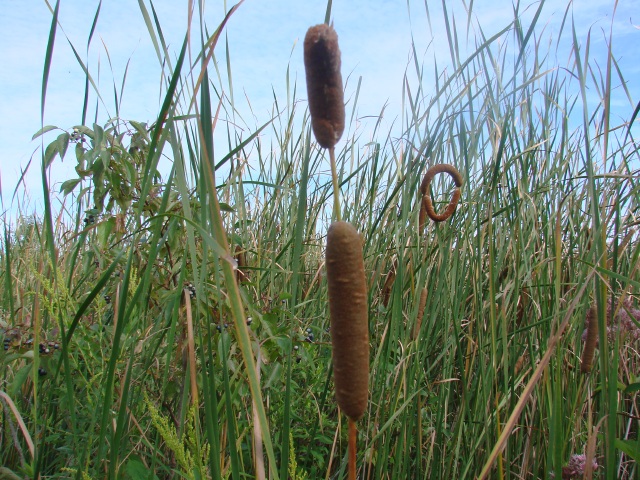
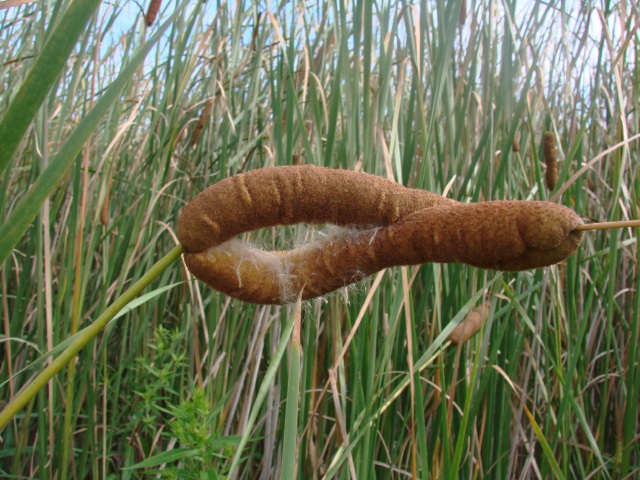
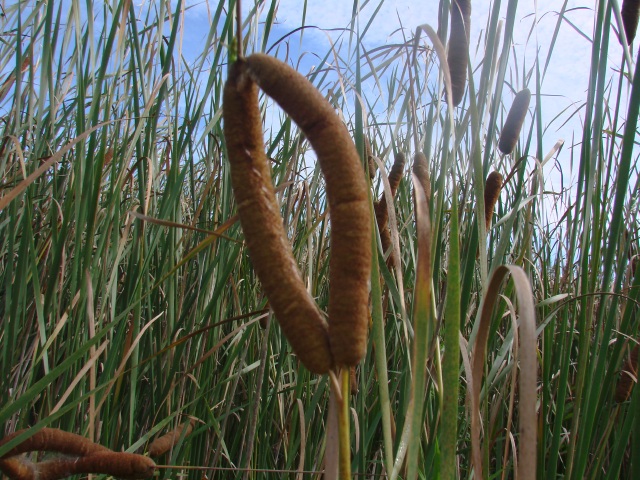
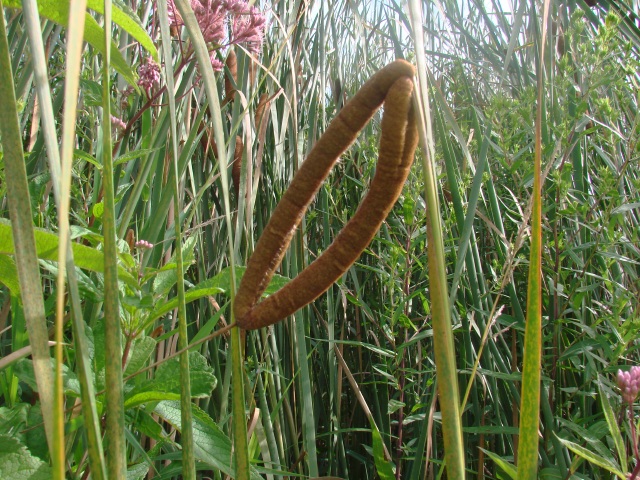
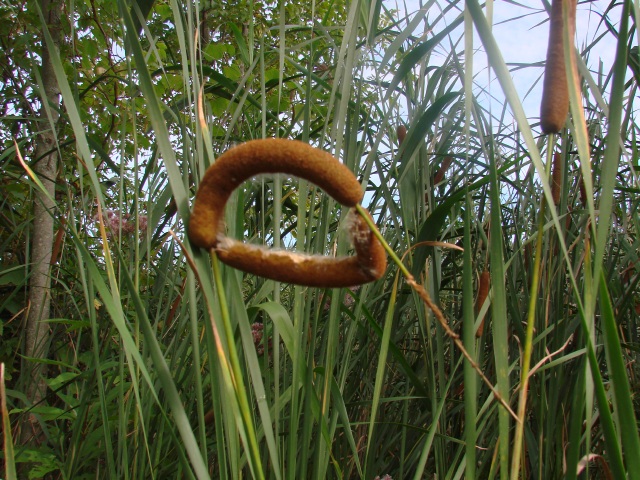
From Steve Daniel in Rochester: These were seen Thursday at WhiteBrook wetlands, part of the Crescent Trail, Town of Perinton, Monroe County.
More Cattail Double-spikes
Posted August 28, 2009 by nyfloraCategories: Plant Sightings


Oh No! A Snafu With the New Website
Posted August 28, 2009 by nyfloraCategories: NY Flora Association
The new nyflora.org website was going to to live today but because of unforseen technical problems we will have to wait a while longer. Stay tuned to this blog for updates.
Torrey Botanical Society Offers Research Award for Students
Posted August 28, 2009 by nyfloraCategories: Funding and Jobs, Plant Organizations
We are pleased to offer to student members for 2010 for the first time the Andrew M. Greller Graduate Research Award for Conservation of Local Flora and Ecosystems. This is an annual award funded by Dr. Greller for outstanding student research directed towards preserving habitat or saving plants and ecosystems from habitat destruction in the Torrey Range, a lifelong passion of his. We continue to offer the Torrey Botanical Society’s Student Fellowship and Training Awards to student members and the Symposium award to all members. See details on the Society’s website http://www.torreybotanical.org.
A Trip to the High Peaks
Posted August 26, 2009 by nyfloraCategories: Plant Sightings
From Patrick Raney, SUNY ESF:
These were some of the plants in bloom around Mount Marcy August 10-12
Solidago cutleri is in bloom at (Mt. Marcy, Basin, Gothics)
Minuartia groenlandica is in bloom and all over (same area, and Saddleback Mtn)
Cornus canadensis
Kalmia polifolia was in bloom just below Mt. Marcy, and at the Gothics
Houstonia caerulea in bloom below the top of Mt. Marcy
Indian pipe is in bloom all over below the peaks
Here are some photos from the area:
-

- Minuartia groenlandica flower
-

- Minuartia groenlandica plant
-

- Monotropa uniflora in bloom
-

- Cornus canadensis flower in late stage
-
- The view from Marcy
-

- Gentiana linearis
Mendon Ponds Genera Quest A Success
Posted August 25, 2009 by nyfloraCategories: Happenings
The field trip to Mendon Ponds was an amazing day. We may have a new record for genera seen in one day. Stay tuned to this site for photos and the final tally. Below is one photo by Steve Daniel as a teaser.

Clear Wing Hawkmoth on Cirsium muticum
New Website: Three Days and Counting
Posted August 25, 2009 by nyfloraCategories: NY Flora Association
The new NYflora.org is scheduled to be live on Thursday!
Double-spiked Narrow-leaf Cattail
Posted August 21, 2009 by nyfloraCategories: Natural History, Plant Identification
From Steve Young – When we were in Catskill Marsh last week we came across many examples of narrow-leaf cattail with double spikes that joined together to form the gap you see in the photo below (sorry for the bad focus).
I had never seen this before and would like to know if anyone else has seen it. If you have you may leave a comment below.

Double-spike cattail
A Good Day At Catskill Marsh
Posted August 16, 2009 by nyfloraCategories: Field Techniques, Invasive Species, Rare Plant Surveys
From Steve Young: On Thursday the 13th of August I joined Chris Zimmerman of The Nature Conservancy and Melissa Kalvestrand, a graduate student at SUNY Albany, on a trek through the freshwater tidal marsh and mudflats of Catskill, or Ramshorn, marsh.

Melissa gathered up all the equipment needed to record the plants in each plot of the marsh within and around a patch of Phragmites. The data will be used to analyze the effect the removal of the Phragmites will have on the marsh vegetation. Fortunately I got the middle of the canoe and Chris and Melissa paddled across Catskill Creek to the marsh, a short distance away.

Chris carried the plot marker through the high Phragmites with Melissa in the lead. They had marked the plots with GPS and flags on previous days so it was not trouble finding them again.
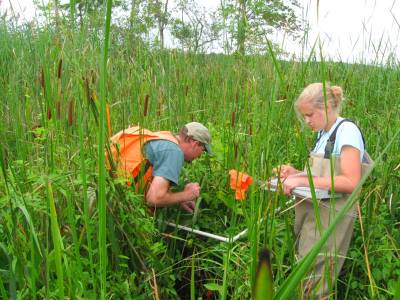
At each plot Chris estimated how much cover each species produced in the square while Melissa recorded the data. I was there to help them with plant identification to make sure all we didn’t miss anything.
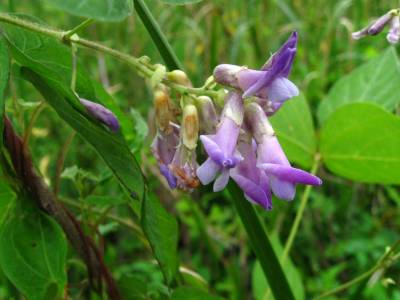
We saw a wide variety of plants in the marsh, some common species like the flowers of hog peanut here (Amphicarpa bracteata), and many other species that can only be found in marsh habitats.

There are lots of species with arrow-shaped leaves like this leaf of wapato (Sagittaria latifolia). There’s also arrowleaf (Peltandra virginica), pickerel-weed (Pontederia cordata) and spatterdock (Nuphar advena). They are not so hard to tell apart in flower but it’s good to know what they are in leaf and the characters that separate them.

For the few hours of low tide a whole new flora reveals itself as the water goes down and the small mud plants appear, mostly strap-leaf arrowhead (Sagittaria subulata) but other small mud plants are hidden among the larger ones and one has to be willing to get down in the mud to see them (take note Mike Rowe of the Discovery Channel). At high tide the spatterdock leaves float on the surface of the water but at low tide the rest of the plant is seen stretching up from the mud. One wonders how much photosynthesis these plants can get in while exposed since their leaves are often covered in mud.

We were fortunate enough to see the flowers of the little strap-leaf arrowhead with are male and female. The male flower is shown here with three white petals and yellow stamens.
We were able to finish the plots by midafternoon under cloudy and cool conditions with no mosquitos! It was a great day in the marsh and we even got so see a few plants of swamp lousewort (Pedicularis lanceolata), a state threatened plant. It was time to go home and hose the mud from the jeans before they went in the washer.
NY Times Article on Taxonomy and the Naming of Organisms
Posted August 13, 2009 by nyfloraCategories: Taxonomy
Click here to see an interesting article on taxonomy by CAROL KAESUK YOON.
I like the last paragraph, copied below, which shows the value of the profession.
Just find an organism, any organism, small, large, gaudy, subtle — anywhere, and they are everywhere — and get a sense of it, its shape, color, size, feel, smell, sound. Give a nod to Professor Franclemont and meditate, luxuriate in its beetle-ness, its daffodility. Then find a name for it. Learn science’s name, one of countless folk names, or make up your own. To do so is to change everything, including yourself. Because once you start noticing organisms, once you have a name for particular beasts, birds and flowers, you can’t help seeing life and the order in it, just where it has always been, all around you.
Yellow-crested Orchis Survey on Long Island
Posted August 12, 2009 by nyfloraCategories: Plant Sightings, Rare Plant Surveys
On August 6th, Kim Smith of the New York Natural Heritage Program visited a known population of Platanthera cristata
 (Yellow-crested Orchis) on Long Island. This species is endangered in New York and known from only a few sites in the state, so it is a very rare sight to see. The plants were growing in pitch pine litter near a salt marsh. When she first walked up to the site, she spotted one or two of the beautiful yellow orchids, but then realized that there were hundreds of them scattered across the area. She estimated there were close to 400 plants in total!


 New York Flora Association Blog