Archive for March 2011

Save the Date: Long Island Pine Barrens Discovery Day Saturday, June 11

March 9, 2011

Learn about the ecology of the Long Island Central Pine Barrens and take part in other educational fun shops, field trips and a kids Discovery Center.  Fun for the whole family.  More information is available at their website.  CLICK HERE to access it.  Rain date June 12th.

The History of High School Botany Education in America

March 8, 2011

Margaret Conover, a botanist from SUNY Stony Brook, has written an interesting overview of how botany has been taught in American high schools from 1800 to the present.  She states that just over 100 years ago nearly all high-school students studied botany for a full year and emphasis was placed on identifying local flora.

Later, the “Golden Age of Botany Teaching” and the nature study movement of the early 1900s had students studying all aspects of plants in nature. The state Board of Regents even had a botany exam (which you can take yourself on page 4 of her article).What happened to this emphasis on botany in high schools? Read her article and you will find out why it is so different today.  Why a student who omits the answer to every plant related question on the Living Environments Regents Exam could still receive a passing grade of 80% and what the forces are that have led to the decline of botany as a subject in high school.

She ends with a note of hope that people are working to cure the “plant blindness” that pervades high-school biology education. To read the full article from the Long Island Botanical Society newsletter CLICK HERE.

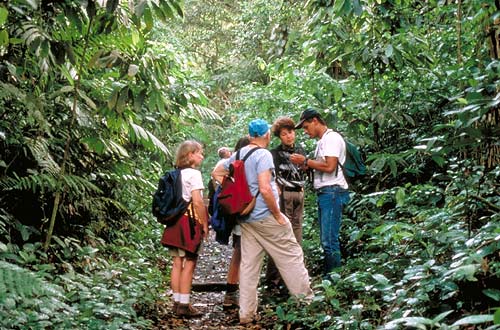
Marielle Anzelone teaches high schoolers about plants in the Bronx. Photo Drosera.com

The Authors of the Cyperaceae of Maine Need a Few Photos

March 8, 2011
Glen Mittelhauser is in the final stages of compiling and editing a field guide to the Cyperaceae of Maine (collaborative effort with Alison Dibble, Matt Arsenault, Don Cameron, Jill Weber, Sally Rooney, and Arthur Haines) and is on track for having this guide published in the next year or two.  The field guide has numerous color photos throughout, with photos of many key characters needed for field identification of each species.  They are slowly picking away on the list of taxa for which they have no photos.  They need photos of the 6 taxa below that they would like to use in their publication (just about any photos would do for these species).  They will give full photographer credit for any donated photos.
Carex macloviana
Carex praegracilis
Carex rariflora
Cyperus houghtonii
Eleocharis intermedia
Eleocharis nitida

If you have a photos of one or more of these species, contact

Glen Mittelhauser, Biologist
Maine Natural History Observatory
317 Guzzle Road
Gouldsboro, ME 04607
(207)963-2012
purplesandpiper@gmail.com

A Flurry of Flora Flashcards

March 7, 2011

Look on the website quizlet.com and you will see many sets of electronic flashcards that can be used to test your knowledge of the flora of a variety of areas from states (Ohio, North Carolina) to local flora. For New Yorkers, you should try the Ohio set since it has a majority of species that are in both states.  Someone should make sets for New York plant groups. To access the site CLICK HERE and have fun! – Steve Young

Upcoming Spring Events at the Long Island Long Pond Greenbelt

March 6, 2011

The most recent newsletter is out for the Long Pond Greenbelt and they highlight some interesting events that pertain to our native flora including:

Saturday, May 7. Peconic Family Fun Day at the Children’s Museum of the East End. This is the first year we’ll be at this event.

Saturday, June 5. Using Native Grasses In Landscaping & Habitat Restoration: A Hands-On Primer. Cosponsored by the Long Island Native Grass Initiative & SoFo. 10:00 at Vineyard Field. Presentation followed by planting session.

For the entire newsletter CLICK HERE.

Rochester Fundraiser for the Christine Sevilla Wetland Preserve

March 5, 2011

Christine was a noted photographer and nature enthusiast of the Rochester area. Christine’s family and friends envision a natural area, including wetlands, preserved in her memory.  This vision includes an educational component, like an interpretive trail to help others recognize what Christine saw – an interconnected natural community of flora and fauna, soil and water. Perhaps even an  Arts and Music Festival to celebrate what Christine so treasured. Below is information about a fund-raising auction of her artwork on April 5 to raise money for the preserve. Click on it for a larger version or CLICK HERE for a link to the website where you can see samples of her beautiful work.


Put Down the Pills and Go Experience Nature

March 4, 2011

A recent article in USA Today talks about how doctors and nature preserves are teaming up to fill patient’s “nature prescriptions” where doctors prescribe a walk in a preserve as well as more healthy eating.  For more on the article CLICK HERE. Sounds like we could have doctors prescribe a botany walk although “botany speed” is usually not very fast, especially for the first 100 feet from the parking lot.

Botany Speed.

An Ode to Naturalists and Their Discoveries

March 3, 2011

A recent New York Times article by Richard Conniff entitled “How Species Save Our Lives” heaps praise on naturalists and their discovery of species that have provided the many health benefits that we enjoy today.  I like his comments, “Were it not for the work of naturalists, you and I would probably be dead.  Or if alive, we would be far likelier to be crippled, in pain, or otherwise incapacitated.” And “When the new wave of emerging diseases comes washing up on our doorsteps, we may find ourselves asking two questions:  Where are the naturalists to help us sort out the causes and cures?  And where are the species that might once have saved us?”

He presents a good, and much used, reason why we must continue to explore the natural world and save species.   I also like his suggestion #7: “Learn to identify 10 species of plants and animals in your own neighborhood, then 20, and onward.” NYFA can help with that! To read the entire article CLICK HERE. You can also see his blog about species at The Species Seekers.

Learning about species at Wildland.com


Cornell Plantation Announces Second Natural Areas Academy

March 2, 2011

ITHACA, NY (February 21, 2011) — Do you love spending time in the forests, meadows and other natural areas of the Finger Lakes region?  Do you care about preserving the integrity of the natural world and do you want to share this love with others?  If so, consider joining Plantations’ Natural Areas Academy.

The year-long Natural Areas Academy (NAA) consists of dozens of expert-led workshops, field trips, and directed stewardship opportunities designed to provide participants with the knowledge, tools, and skills needed to support efforts in preserving our treasured natural resources. Utilizing Plantations’ Natural Areas as outdoor classrooms, the NAA aims to foster the conservation of natural areas and rare and declining species and their habitats by demonstrating essential stewardship methods, cultivating environmental literacy, and encouraging interactive experience with the natural world.

“With their newly gained expertise, the Natural Areas Academy participants will also help to mentor the next generation of scientists, teachers, environmental stewards, and leaders, thereby fulfilling a vital role in the long-term preservation of our natural heritage, our world, and ultimately, our place in it,” stated Todd Bittner, director of the Cornell Plantations Natural Areas,

Participants in the NAA are expected to work towards the program’s goals over the course of a year.  After the completion of at least eight of the workshops and field trips, plus 40 hours of participation in directed stewardship activities, academy members will receive their Natural Areas Mentor certification and may continue to participate in the NAA as a mentor for no cost. The first NAA workshop will be for a mandatory orientation, and will be held on Saturday, March 12, beginning at 9:30 AM.

Participation in the NAA requires a non-refundable $100 application fee.  To learn more or to enroll online, please visit us at www.cornellplantations.org/NAA.  Enrollment closes at midnight on March 11, 2011.

Cornell Plantations is the botanical gardens, arboretum, and natural areas of Cornell University, and is a member of Ithaca’s Discovery Trail partnership. Plantations is open to the public year-round, free of charge, during daylight hours. The Brian C. Nevin Welcome Center is open Tuesday-Saturday from 11am to 4pm.  For more information call 607-255-2400, visit cornellplantations.org, and find us on Facebook at facebook.com/cornellplantations.
Are You An Invasivore?

March 1, 2011

You are if you consume invasive species. A new website has been set up to delve into the subject of consuming invasive species.

Here is an excerpt from their introduction:

It’s Invasive Species Awareness Week, and although every week is unofficially Invasive Species Awareness Week here at Invasivore.org, we have decided to treat our readers to a special entrée discussing the invasion process, management of invasions, and the role we envision for invasivore.org within this framework. Ultimately, the true purpose of eating invasive species is increasing awareness; we encourage the lifestyle and political choices needed to prevent species introductions.