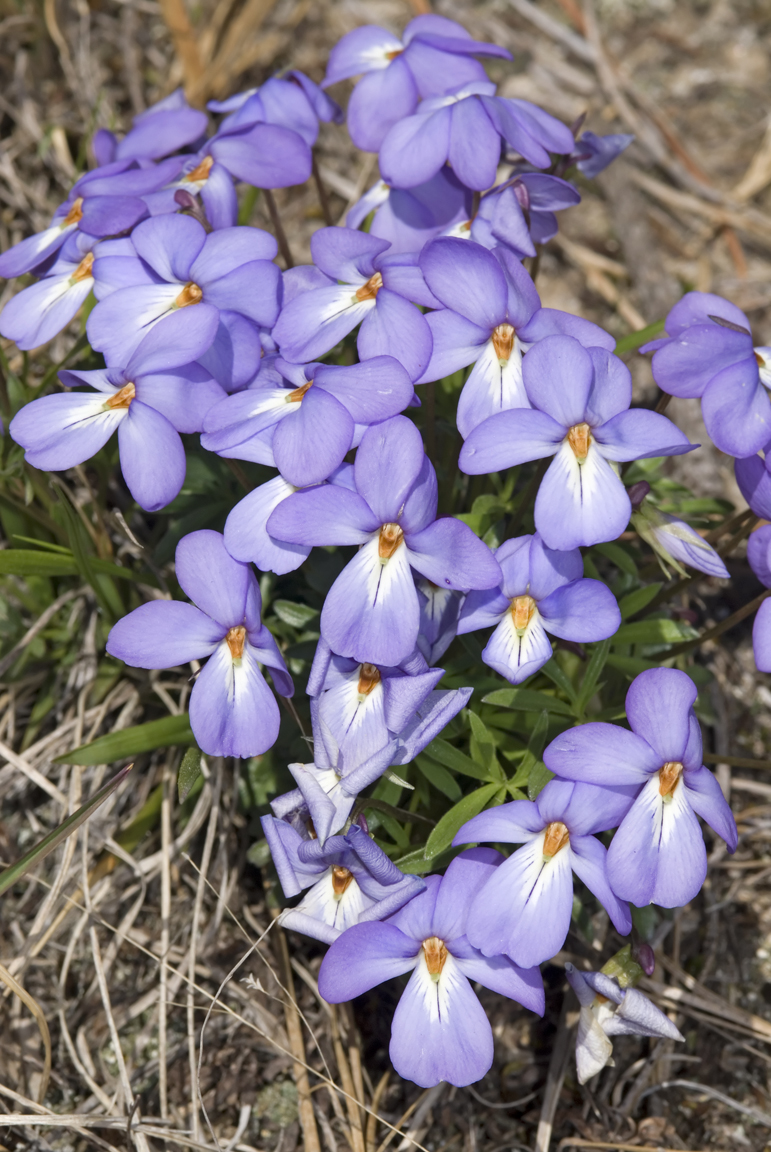
Here is a recent photo by photographer John Heidecker of bird’s-foot violet (Viola pedata) on a roadside on Long Island. A sight like this is becoming more rare on the island and the NY Natural Heritage Program will be putting this violet on their watch list and gathering more information about its status in the state. Heritage botanist Steve Young would appreciate any information about its current locations in the state. If you know of any locations please contact Steve at young@nynhp.org. You can view more beautiful flower photos at John’s Website.
Archive for the ‘Plant Sightings’ category
Bird’s-Foot Violet on Long Island
April 23, 2010Fir Clubmoss (Huperzia selago) Seen in New York for the First Time in 94 Years!
October 7, 2009From Steve Young: On September 7 Anne Johnson, Nancy Eldblom, and David Werier were exploring the town of Waddington in St. Lawrence County when they came across a population of about 5 stems of Huperzia selago in dry sandy soil in a poor pasture reverting to a thick cedar stand. This was the first time this historical rare plant had been seen in New York since 1915 when it was collected in the Town of Fine, also in St. Lawrence County. Congratulations to the intrepid explorers for this significant find!

Fir clubmoss stem. Photo: David Werier.

Fir clubmoss forking stem. Photo: David Werier.
Long Island Plant Sightings May 2009
September 25, 2009From the Long Island Botanical Society:
Corydalis sempervirens, pink corydalis (Fumariaceae, the Fumitory Family; formerly included in the Papaveraceae, the Poppy Family). This delicate, showy spring wildflower is very rare on Long Island; the LIBS draft atlas of vascular plants records it from only one unspecified locality in Suffolk County. On 30 May 2009, George Dadone found a naturally occurring population of pink corydalis at the former Pilgrim State Hospital property in Edgewood. Rich Kelly, Donald House, and Paul and Mary Beth Tomko accompanied George.
Silene caroliniana ssp. pensylvanica, wild pink (Caryophyllaceae, the Pink Family). Rich Kelly, Donald House, et al. observed a small population of this state-listed, rare plant at the former Pilgrim State Hospital property in Edgewood on 30 May 2009. Steve Young of NYNHP has been closely monitoring this species in New York and has reported a decline in occurrences possibly due to browsing by herbivores.
Euphorbia ipecacuanhae, ipecac spurge (Euphorbiaceae, the Spurge Family). This species is at its northern range limit on Long Island; in New York, it is known only from Suffolk County where it usually occurs in extremely nutrient poor, well drained, dry sandy soils. Usually, occurrences on L.I. consist of very few individuals (fewer than a dozen widely scattered individuals). On 30 May 2009, Rich Kelly, Donald House, et al. observed three widely scattered individuals of ipecac spurge at the former Pilgrim State Hospital property in Edgewood.
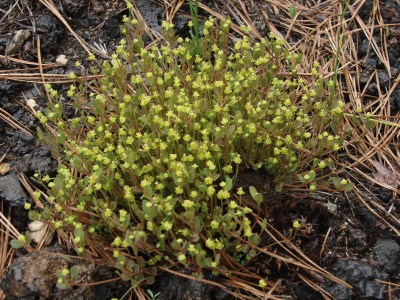
Ipecac plant at Edgewood. Photo: Steve Young
Viola pedata, bird’s foot violet (Violaceae, the Violet Family). On 31 May 2009, John Heidecker observed a large colony of bird’s foot violet in full flower growing in sandy soil along Grumman Blvd. in Calverton, a short distance from the Swan Lake Golf Course. Thirty years ago, this showy violet was relatively common throughout regions of Long Island, but today it is rarely observed. The decline of this species on L.I. is mostly attributed to habitat destruction, road expansion and maintenance projects, and chemical herbicides applied along the borders of railroad tracks.

Viola pedata at Edgewood. Photo: Steve Young
A Variety of White Pale Impatiens
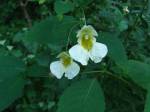
September 5, 2009From Steve Young: I was down along the Mohawk Bike Trail in Niskayuna, Sche. Co. this afternoon and saw a many white flowers of the pale impatiens, then I saw them with extra lobes on the petals. I had never noticed them before. Photos below.
Mendon Ponds/Auburn Trail Trip Sets New Genera Quest Record
August 30, 2009The NYFA trip to Mendon Ponds and the Auburn Trail in Railroad Mills on August 22 set a new one-day record for genera seen at 258! The old record was 243 at Alley Pond Park in Queens in 2008. The Mendon area is very diverse with eskers, ponds, marshes, a kettlehole sphagnum bog and a fen. We saw 229 genera in the park so it actually was less than what we saw in Alley Pond but the walk along the Auburn Trail added 29 more genera for the grand total for the day. The full list of species will be published in the next NYFA newsletter and added to our website. Thanks go to the eager participants whose sharp eyes spotted all the beautiful plants we saw that day and our leader Steve Daniel who knows the plants in both areas very well. Some photos from the day are below.

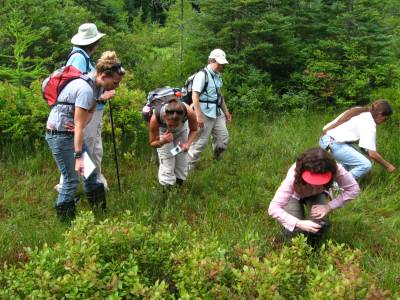
Identifying plants in the bog

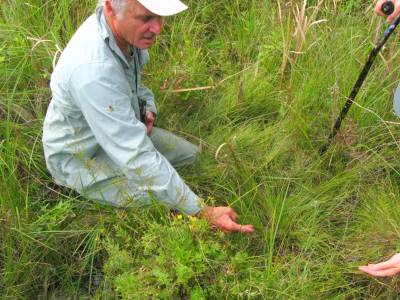
Steve Daniel showing Triglochin palustre

Flowers of the rare swamp lousewort, Pedicularis lanceolata

Happy plant hunters: Steve Young, Ken Hull, Carol Southby, Georgianna Vyverberg, Steven Daniel, Megan Caves, Sarah Shute, Ed Fuchs, Christine Sevilla, Amy Kahn, Karen Schreiner. Not present for photo (Kim Hartquist).
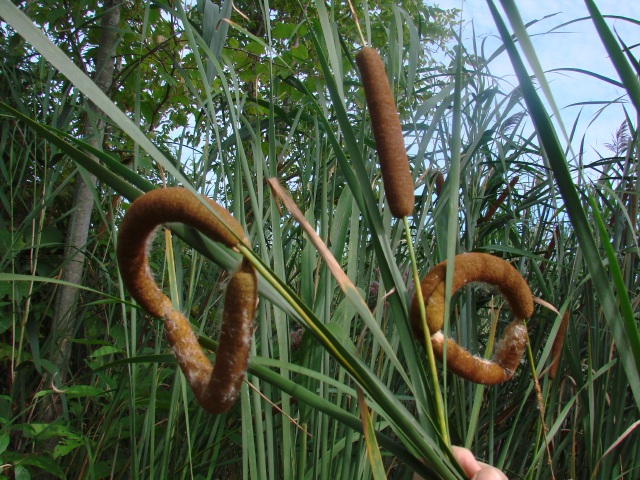
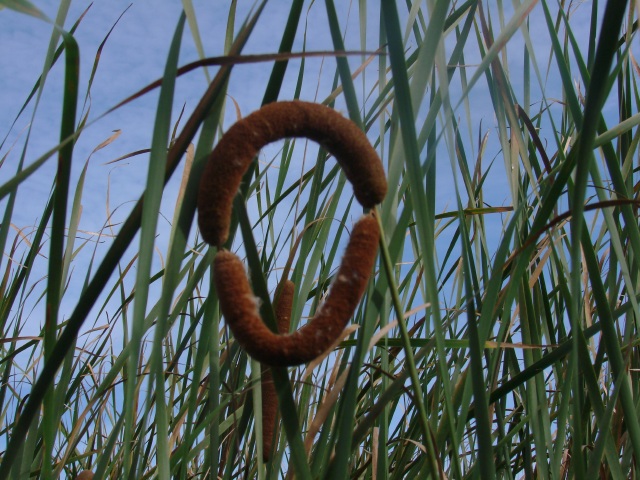
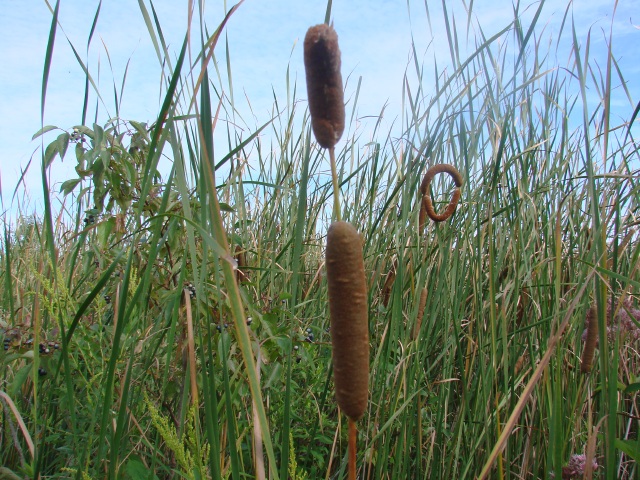
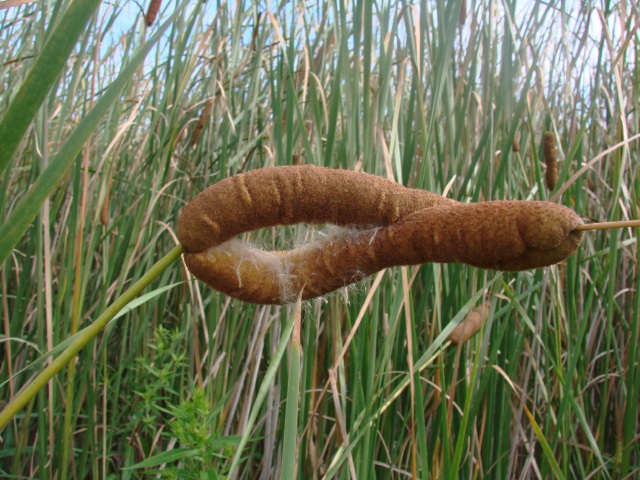
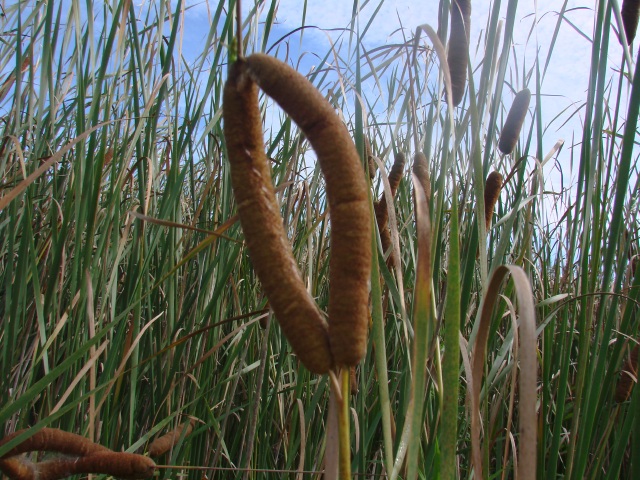
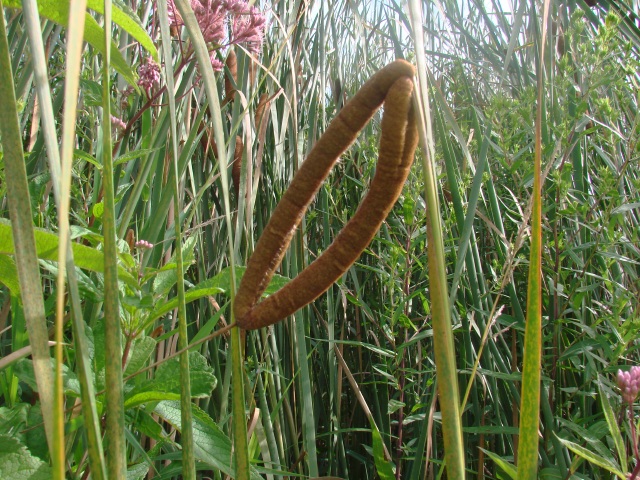
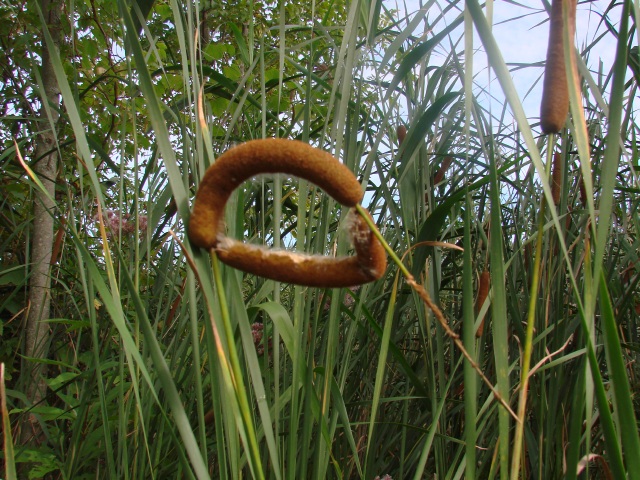
More Cattail Double-spikes
August 28, 2009From Steve Daniel in Rochester: These were seen Thursday at WhiteBrook wetlands, part of the Crescent Trail, Town of Perinton, Monroe County.
A Trip to the High Peaks
August 26, 2009From Patrick Raney, SUNY ESF:
- Minuartia groenlandica flower
- Minuartia groenlandica plant
- Monotropa uniflora in bloom
- Cornus canadensis flower in late stage
- The view from Marcy
- Gentiana linearis
Yellow-crested Orchis Survey on Long Island
August 12, 2009On August 6th, Kim Smith of the New York Natural Heritage Program visited a known population of Platanthera cristata
(Yellow-crested Orchis) on Long Island. This species is endangered in New York and known from only a few sites in the state, so it is a very rare sight to see. The plants were growing in pitch pine litter near a salt marsh. When she first walked up to the site, she spotted one or two of the beautiful yellow orchids, but then realized that there were hundreds of them scattered across the area. She estimated there were close to 400 plants in total!
New York Times Featured NYFA Board Member Gerry Moore
August 3, 2009There is a series of three article where Gerry Moore, botanist at the Brooklyn Botanic Garden and NYFA board member, answered questions about the flora of New York City. See the questions and answers starting here. The series was discontinued after the three installments.
Utica Marsh BioBlitz Results
July 29, 2009The first BioBlitz at Utica Marsh was held on Saturday, June 27, 2009. Congratulations to all participants!
What is a BioBlitz? It’s a one-day intensive survey of all living organisms in a designated area. Why run a BioBlitz? (1) to document which species live in our area to understand local nature better and to provide a baseline for management of Utica Marsh; and (2) to raise awareness in the greater Utica area about the living things that are around us. The BioBlitz was sponsored by the Utica Marsh Council, NYSDEC, and Hamilton College.
See the results at: http://academics.hamilton.edu/biology/ewilliam/bioblitz/