CLICK HERE to see the New York Natural Heritage Program’s rare plant list that you can sort by family, scientific name, common name, Heritage rank or protected status.
Archive for the ‘Rare Plants’ category
NY Rare Plant List Now Available in Online Sortable List
December 2, 2010Northeastern Bulrush (Scirpus ancistrochaetus) Rediscovered in New York
August 21, 2010From Steve Y0ung, NY Natural Heritage Program – This federally-threatened plant is known from Virginia north to Vermont. Learn more about it at the Center for Plant Conservation website HERE. In New York, there was only one historical collection, from the Putnam Mountain area in Washington County in northeastern New York, from September 1900, and it was listed as extirpated from the state. The location for the historical record has been searched numerous times but no plants have been found again. In recent years more populations of the bulrush were found in adjacent Vermont and in northern Pennsylvania in a county adjacent to New York. It was frustrating that we couldn’t find it in New York – it was so close by.
This year I received funds from the US Fish and Wildlife Service to look for it again in the Southern Tier of New York to see if there were populations extending north from Pennsylvania. On the second day of searching small wetlands in Steuben County, south of Corning, I finally found it. It was growing in a small (40 m diameter) vernal wetland at the top of a hill that I had identified as a place to search using topographic maps and Bing birds-eye-view aerial photos on the web. One month shy of the 110th anniversary of its last collection in New York, it was back in our flora. I spent two more days searching other wetlands in the county, and I have more days to search later in the month so I hope I can discover more populations. Dr. Rob Naczi from the NY Botanical Garden will also be searching areas near Vermont. Let’s hope he will find some in that area as well. Stay tuned to this blog . . .
Below are some of the photos from the population in Steuben County.
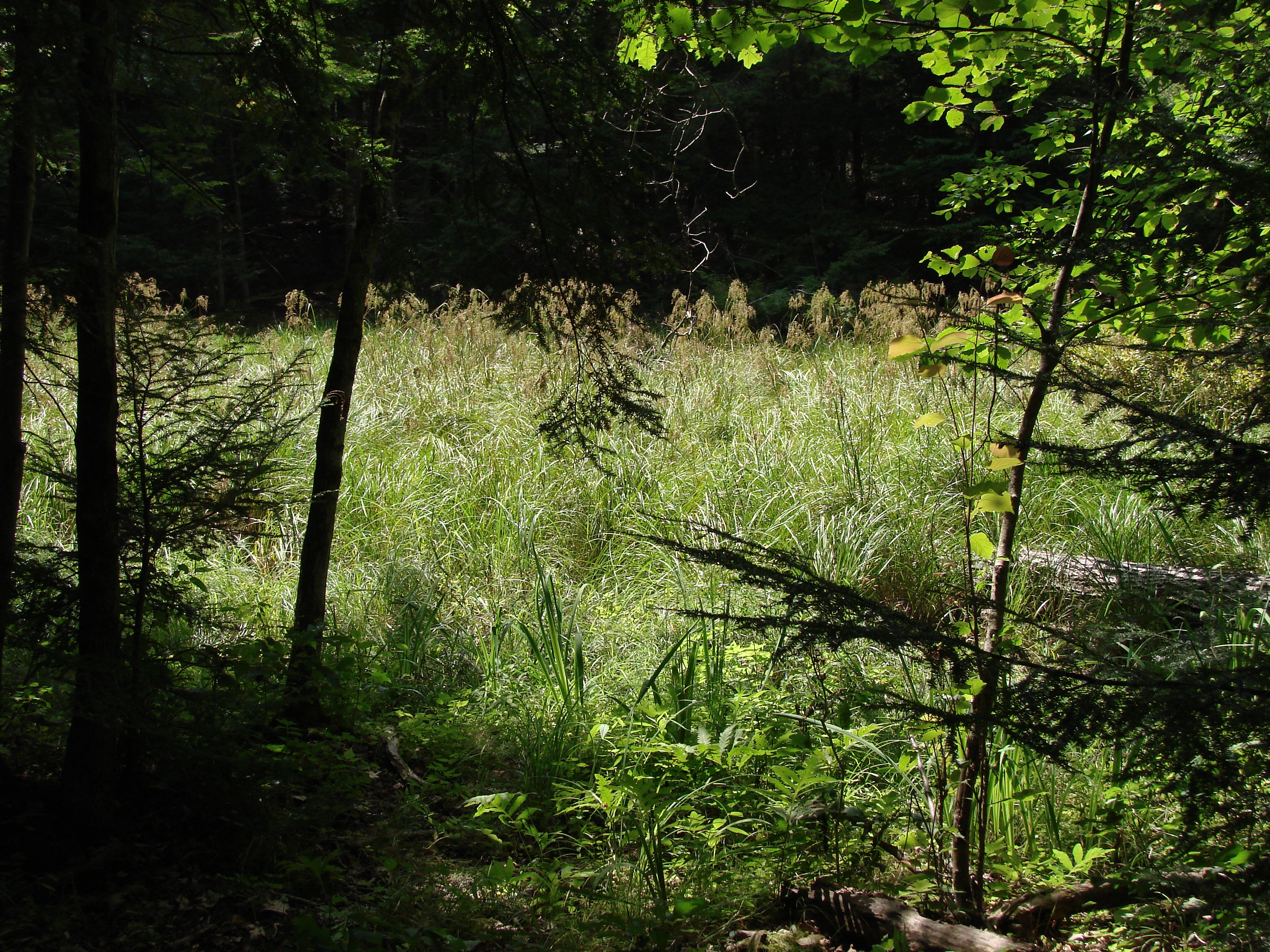
This is what the wetland looked like as I approached through the hemlock woods.

In the middle was a small open muddy area surrounded by Northeastern bulrush.

The species has rays that arch down from the top of the culm.

The culms usually lay down and root in the mud.
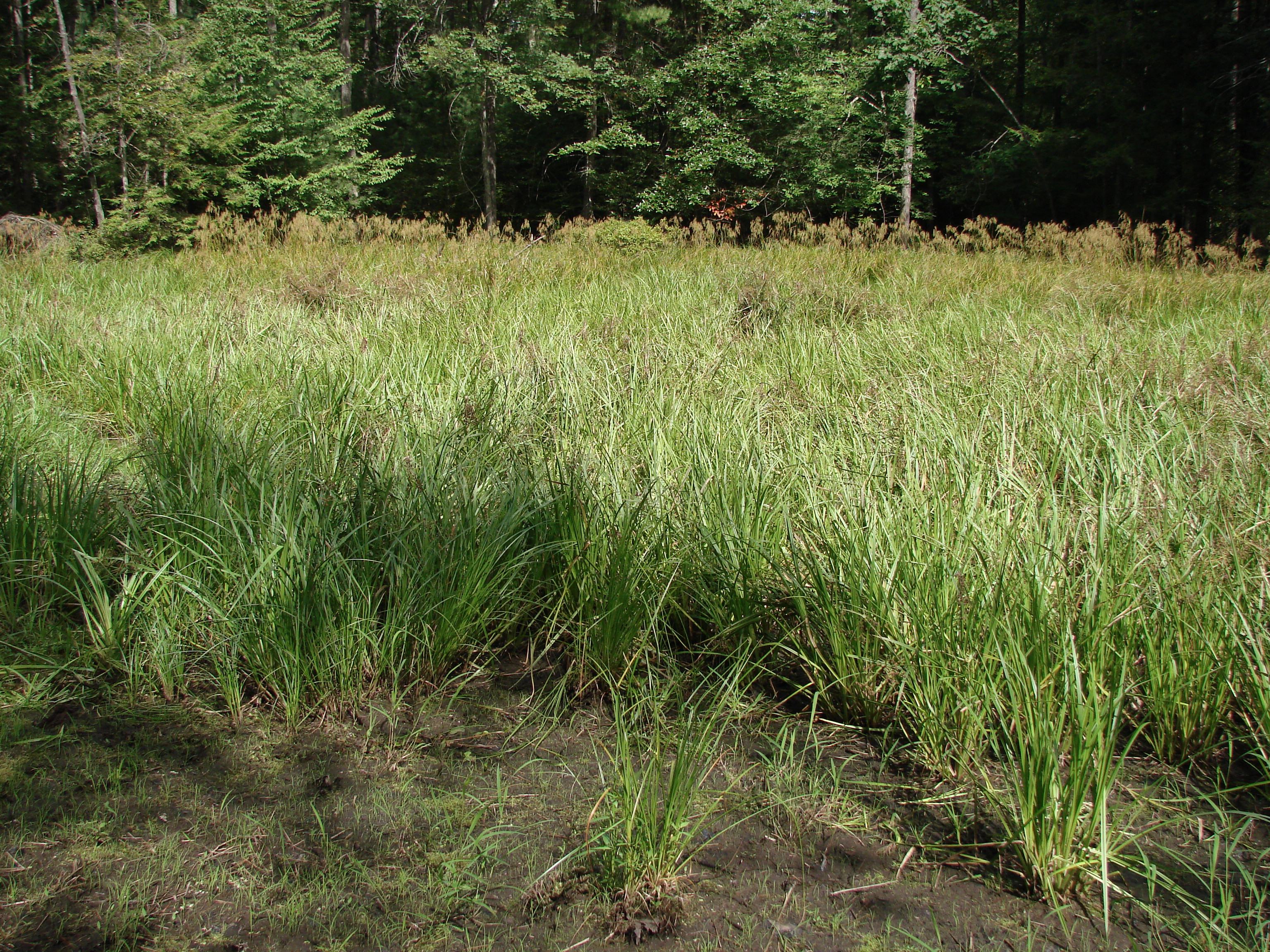
The peripheral open muddy areas had different plant species but the area covered by the bulrush was almost a monoculture.
Soft Fox Sedge (Carex conjuncta) Rediscovered in New York.
August 7, 2010Botanist David Werier rediscovered this state endangered sedge in Chemung County this summer. It had not been seen in the state since a specimen was collected in 1966 in Rensselaer County and was listed as state historical by the New York Natural Heritage Program. This species is similar to Carex vulpinoidea and Carex alopecoidea and was collected fewer than 10 times before in New York – in the counties of Chemung, Herkimer, Oneida, Saratoga and Westchester. It may be overlooked because of its similarity to the previously mentioned species and a good description and photos of it with a comparison to those species can be found at the website for Illinois wildflowers. Click here to see the description. Congratulations David! – Steve Young
New Population of the State Threatened Sea-Pink Found on Long Island
August 5, 2010Luke Ormond found New York’s 9th population of the rare sea pink (Sabatia stellaris) in a salt marsh near Riverhead this week. This beautiful wildflower is only found on the east end of Long Island in New York and makes a good subject for photography. You can see his pictures of the plant on his beautiful blog of Wild Long Island by clicking HERE. Nice find Luke! – Steve Young
Giant Pine-Drops (Pterospora andromedea) Reappear This Year Along Lake Champlain.
July 27, 2010The giant pine drops that were rediscovered last year north of Plattsburgh reappeared this year in the exact same spot. It’s still a mystery why this plant has become so rare in New York after being seen many times across the state in the late 1800s and early 1900s. Currently PhD. student Nick Dowie from the University of Wyoming is researching its relationship with Rhizopgon fungi and rarity. Below are photographs taken of this year’s plan by Lawrence Gillett, the person who originally discovered the population.


Endangered Small Whorled Pogonia Rediscovered in New York After Decades of Search
June 14, 2010Small whorled pogonia (Isotria medeoloides), a federally threatened orchid, was discovered in Orange County, New York in late May by Kimberly Smith, a botanist for DEC’s New York Natural Heritage Program and the Office of State Parks, Recreation and Historic Preservation. Kim spotted the orchid in a state park where she was performing botanical surveys for other rare plants. No one has seen this small orchid in New York since 1976 when botanist Mildred Faust photographed two flowers in a swamp in Onondaga County. Beaver have flooded that area since then and invasive plants have come in so the orchids are no longer there. The orchid is present in 17 other states in the Eastern United States and in Ontario but it is endangered or threatened in each one.
Botanists have spent decades looking for small whorled pogonia throughout New York where it had been collected only five times before 1976, from 1887 to 1923. Botanists collected it once in five different counties: Washington, Ulster, Rockland, Nassau and Suffolk. Orange County is now added to the list of counties where it grows. Botanists for the New York Natural Heritage Program have rediscovered other rare plants that no one has seen in many decades, sometimes for over 100 years, but this discovery is especially important because it involves a globally rare and federally threatened orchid. Congratulations Kim! – Steve Young

Small Whorled Pogonia, Orange County - Photo Kim Smith
Dragon’s Mouth Orchid Rediscovered On Long Island
June 10, 2010It had been 25 long years since the state rare Dragon’s Mouth Orchid (Arethusa bulbosa) was seen on Long Island. Kim Smith, New York Natural Heritage Program State Parks Botanist was bushwacking through some wet thickets in a state park in Suffolk County when she spotted just one plant of this rare orchid. After further searching Kim did not turn up any additional plants. Now that we know they are still here we can intensify our efforts to locate more plants. Arethusa is an orchid that grows in medium to high pH wetlands and usually with sphagnum. It has been recorded from many upstate counties but wetland habitat loss has reduced its numbers. It is very hard to see when it is not in flower and may not come up every year which limits the time when searches can be performed. It sure is rewarding to find it however since it is one of our most beautiful orchids. – Steve Young

Arethusa in the Adirondacks - Photo Steve Young
Giant Pine-Drops (Pterospora andromedea) Rediscovered along Lake Champlain.
October 7, 2009From Steve Young: Giant pine drops had not been seen along Lake Champlain since 1963 when it was observed on Valcour Island. This summer one plant was found along a trail north of Plattsburgh by Lawrence Gillett, a retired SUNY Plattsburgh geology professor. This beautiful saprophyte (or possibly a fungal parasite) is very rare in New York and only a few locations are presently known – west of Rochester. It seemed to be most common in New York in the late 1800s and early 1900s and mostly from central and western New York along big lakes and rivers. The only other Clinton County record is a 1905 collection at Bluff Point just south of Plattsburgh. This plant may appear one year and not reappear again for more than a decade, making it difficult to survey. It’s nice to know that it’s still around the Lake Champlain area.
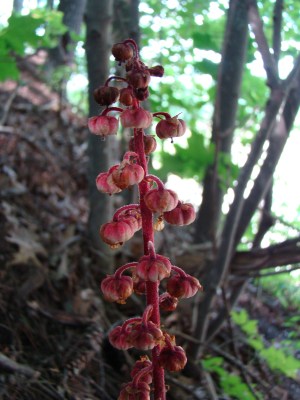
Giant Pine-drops flowers at Letchworth State Park. Photo: Kim Smith.
Fir Clubmoss (Huperzia selago) Seen in New York for the First Time in 94 Years!
October 7, 2009From Steve Young: On September 7 Anne Johnson, Nancy Eldblom, and David Werier were exploring the town of Waddington in St. Lawrence County when they came across a population of about 5 stems of Huperzia selago in dry sandy soil in a poor pasture reverting to a thick cedar stand. This was the first time this historical rare plant had been seen in New York since 1915 when it was collected in the Town of Fine, also in St. Lawrence County. Congratulations to the intrepid explorers for this significant find!

Fir clubmoss stem. Photo: David Werier.

Fir clubmoss forking stem. Photo: David Werier.
October 2008 NY Rare Moss List Now Available
May 7, 2009Aissa Feldmann of the New York Natural Heritage Program has just posted the new rare moss list for New York State. This is the first revision of the moss list since the late 1980s and reflects the recent work of Nat Cleavitt, Sue Williams and Nancy Slack. Click Here.


 New York Flora Association Blog