Rochester Fundraiser for the Christine Sevilla Wetland Preserve

Posted March 5, 2011 by nyflora
Categories: Funding and Jobs

Christine was a noted photographer and nature enthusiast of the Rochester area. Christine’s family and friends envision a natural area, including wetlands, preserved in her memory.  This vision includes an educational component, like an interpretive trail to help others recognize what Christine saw – an interconnected natural community of flora and fauna, soil and water. Perhaps even an  Arts and Music Festival to celebrate what Christine so treasured. Below is information about a fund-raising auction of her artwork on April 5 to raise money for the preserve. Click on it for a larger version or CLICK HERE for a link to the website where you can see samples of her beautiful work.


Put Down the Pills and Go Experience Nature

Posted March 4, 2011 by nyflora
Categories: General

A recent article in USA Today talks about how doctors and nature preserves are teaming up to fill patient’s “nature prescriptions” where doctors prescribe a walk in a preserve as well as more healthy eating.  For more on the article CLICK HERE. Sounds like we could have doctors prescribe a botany walk although “botany speed” is usually not very fast, especially for the first 100 feet from the parking lot.

Botany Speed.

An Ode to Naturalists and Their Discoveries

Posted March 3, 2011 by nyflora
Categories: Ecology, Natural History, Plant Uses

A recent New York Times article by Richard Conniff entitled “How Species Save Our Lives” heaps praise on naturalists and their discovery of species that have provided the many health benefits that we enjoy today.  I like his comments, “Were it not for the work of naturalists, you and I would probably be dead.  Or if alive, we would be far likelier to be crippled, in pain, or otherwise incapacitated.” And “When the new wave of emerging diseases comes washing up on our doorsteps, we may find ourselves asking two questions:  Where are the naturalists to help us sort out the causes and cures?  And where are the species that might once have saved us?”

He presents a good, and much used, reason why we must continue to explore the natural world and save species.   I also like his suggestion #7: “Learn to identify 10 species of plants and animals in your own neighborhood, then 20, and onward.” NYFA can help with that! To read the entire article CLICK HERE. You can also see his blog about species at The Species Seekers.

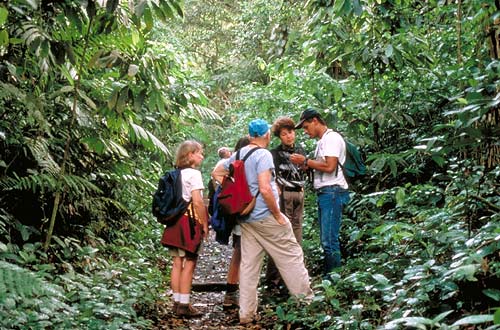
Learning about species at Wildland.com


Cornell Plantation Announces Second Natural Areas Academy

Posted March 2, 2011 by nyflora
Categories: Classes and Workshops, Field Trips, Plant Organizations

ITHACA, NY (February 21, 2011) — Do you love spending time in the forests, meadows and other natural areas of the Finger Lakes region?  Do you care about preserving the integrity of the natural world and do you want to share this love with others?  If so, consider joining Plantations’ Natural Areas Academy.

The year-long Natural Areas Academy (NAA) consists of dozens of expert-led workshops, field trips, and directed stewardship opportunities designed to provide participants with the knowledge, tools, and skills needed to support efforts in preserving our treasured natural resources. Utilizing Plantations’ Natural Areas as outdoor classrooms, the NAA aims to foster the conservation of natural areas and rare and declining species and their habitats by demonstrating essential stewardship methods, cultivating environmental literacy, and encouraging interactive experience with the natural world.

“With their newly gained expertise, the Natural Areas Academy participants will also help to mentor the next generation of scientists, teachers, environmental stewards, and leaders, thereby fulfilling a vital role in the long-term preservation of our natural heritage, our world, and ultimately, our place in it,” stated Todd Bittner, director of the Cornell Plantations Natural Areas,

Participants in the NAA are expected to work towards the program’s goals over the course of a year.  After the completion of at least eight of the workshops and field trips, plus 40 hours of participation in directed stewardship activities, academy members will receive their Natural Areas Mentor certification and may continue to participate in the NAA as a mentor for no cost. The first NAA workshop will be for a mandatory orientation, and will be held on Saturday, March 12, beginning at 9:30 AM.

Participation in the NAA requires a non-refundable $100 application fee.  To learn more or to enroll online, please visit us at www.cornellplantations.org/NAA.  Enrollment closes at midnight on March 11, 2011.

Cornell Plantations is the botanical gardens, arboretum, and natural areas of Cornell University, and is a member of Ithaca’s Discovery Trail partnership. Plantations is open to the public year-round, free of charge, during daylight hours. The Brian C. Nevin Welcome Center is open Tuesday-Saturday from 11am to 4pm.  For more information call 607-255-2400, visit cornellplantations.org, and find us on Facebook at facebook.com/cornellplantations.

Are You An Invasivore?

Posted March 1, 2011 by nyflora
Categories: Invasive Species

You are if you consume invasive species. A new website has been set up to delve into the subject of consuming invasive species.

Here is an excerpt from their introduction:

It’s Invasive Species Awareness Week, and although every week is unofficially Invasive Species Awareness Week here at Invasivore.org, we have decided to treat our readers to a special entrée discussing the invasion process, management of invasions, and the role we envision for invasivore.org within this framework. Ultimately, the true purpose of eating invasive species is increasing awareness; we encourage the lifestyle and political choices needed to prevent species introductions.

VIDEO: Invasive Emerald Ash Borer Upsets Great Lakes Ecosystem, Economy

Posted February 28, 2011 by nyflora
Categories: Invasive Species

Here is a good overview of the effects this insect has had in the Midwest and what we should expect to happen in New York. CLICK HERE.

Below is a video of a June 2010 newscast about the beetle first showing up in Western New York.

Is There a Complete Illustrated Online Plant Glossary?

Posted February 27, 2011 by nyflora
Categories: Publications, Apps, and Websites

I have been looking for a complete illustrated plant glossary that would be accessible online. The closest I have come is one called the Botanical Visual Glossary by the LSU herbarium another by Arieh Tal that use photos to show plant parts with little arrows.  This is a good start and I hope they continue adding more terms and more photos to their terms in this fashion. Maybe one of our readers knows of another online glossary that I am missing. My ultimate wish would be to have online dichotomous keys (I have a hard time with random access interactive keys; I don’t think you learn characters as well with them) that would have hotlinks to photos or short videos to the descriptive words or phrases in the couplets. – Steve Young

Photo showing the term "revolute" in the Tal glossary

Wildflowers of Central New York Video

Posted February 26, 2011 by nyflora
Categories: Plant Identification, Plant Sightings, Quiz

This is a simple slideshow of common wildflowers with birds singing in the background.  The photographer needs to work on his focus but it’s nice to see these in the winter and anticipate things to come.  Try to guess what they are as they come up (don’t look at the caption!).

Native vs. Invasive Plant ID Workshop in Connecticut

Posted February 25, 2011 by nyflora
Categories: Invasive Species

From Bill Moorhead: CLICK HERE for an announcement of two 1-day plant identification workshops, a Fairfield County edition and a Litchfield county edition, taught by me and co-sponsored by Aton Forest Inc. and Highstead Arboretum, focusing on distinguishing invasive plants from similar native species in the field in late winter/early spring, i.e., in leaf-off condition and/or somewhere between leaf-on and leaf-off.  The first takes place on Wednesday, Mar 23, 2011, at & near Highstead Arboretum in Redding, CT, and the second Friday, Mar 25, at & near White Memorial Conservation Center, in Litchfield, CT.  At both we will see in the field (weather permitting, in the lab, if not) most of the woody invasive plants that occur in Connecticut, several other non-native woody species that may come to recognized as invasives in the future, and possibly a number of invasive herbaceous species that are detectable at this time of year (if we can see the ground!).  Please forward this email to anyone that you know who might be interested in and benefit from it, and please contact me (contact info in the closing) if you have questions about the workshop.  I have included on this distribution list many people that I know probably do not need to take this workshop, in hopes that you would forward it to people who would benefit from it, and websites that reach people who would benefit from it.
Thanks and best wishes,

Bill Moorhead
Consulting Field Botanist
486 Torrington Road
Litchfield, CT 06759
Phone & FAX: 860-567-4920
Cell phone: 860-543-1786
Email: whmoorhead@optonline.net

SUNY ESF Video Introduction to Mosses

Posted February 24, 2011 by nyflora
Categories: Bryophytes

Here is a nice video about the basics of mosses and a way to use buttermilk or stale beer to grown them in your backyard. It runs about 2 minutes and features interpretive naturalist Rob Carr.