This is the time of year when violets are flowering. You can use THIS KEY to New York species to help you identify them. If you are also seeing willows and ignoring them because they are too hard to identify try THIS KEY by David Werier to help you out. Have fun in the field! – Steve Young
Seeing a Lot of Violets and Willows? Use our NY Keys.
Posted May 2, 2012 by nyfloraCategories: Field Techniques
New Canadian Medicinal Plant Website. Many Species in New York.
Posted May 1, 2012 by nyfloraCategories: Publications, Apps, and Websites
From: Ernie Small & Paul M. Catling
Our book [Small, E. and Catling, P.M. 1999. _Canadian medicinal crops_. NRC
Press, Ottawa. 250 p.
CLICK HERE for the website.
This website is a comprehensive reference guide to important medicinal lants that are native to Canada. Chapters feature species such as ginseng, echinacea, Pacific yew, goldenseal, cascara, witch hazel, and kelp. The explosive interest in herbal products that provide medicinal or health benefits has resulted in a need for information. As well as being vitally important to the public and merchants, medicinal plant information is crucial to farmers, economists, teachers, the pharmaceutical industry, and the medical arts professions. Canada has the potential to capitalize on tremendous global marketing opportunities. We are in an excellent position to take advantage of the rapidly expanding market for so-called “nutraceutical crops” (those that are used to produce substances that are both medicinal and nutritional), because many of these are native to Canada and grow well here. This website meets the need for an overview of available information. The user can quickly find details on a particular topic by examining the categories of information, which include: scientific, English and French names, description and classification, medicinal uses, non-medicinal uses, toxicity, chemistry, importance, ecology, agricultural and commercial aspects, human interest information, and selected key literature. All species are extensively illustrated and distribution maps are included. Introductory chapters address such topics as: the business of growing medicinal plants; the regulatory and legal framework in Canada for producing and marketing medicinal plants; and hazards associated with medicinal plants. Also provided are: an extensive glossary of medicinal and pharmacological terms; and extensive general list of books, review articles and research articles related to Canadian medicinal plants. The increased availability of this information is both important to the agriculture sector and of broad, general interest.
Saratoga Springs Tree Survey Off To a Great Start
Posted May 1, 2012 by nyfloraCategories: Education and Research, Happenings, People
Here is an update from Tom Denny on this important project:
On April 21, in celebration of Earth Day weekend, Sustainable Saratoga’s Urban Forestry Project launched our 2012 tree survey season. The threatening weather held off and we had seventy-five passionate volunteers sign in, which doesn’t even include the nice turnout of kids who came with their families. You can count ‘em in the attached photo, taken under one of Saratoga’s legacy American elms. (A special thanks to Commissioners Michele Madigan and Chris Mathiesen, as well as Supervisor Joanne Yepsen, for their participation.) It was festive, it was fun, it was gratifying, it was educational, and it was productive. The energy was phenomenal and we accomplished a great deal in one day. Many dedicated volunteers worked from 10 AM until the rain chased them in about 3 PM. We followed that up with additional training sessions on the evenings of April 23 and 24, which placed nearly thirty additional volunteers into the field. All in all, over 100 volunteers hit the streets counting trees this week, with an additional fifty having expressed willingness but not yet having attended a training session. A huge thanks to all ! This offers a strong sign of how greatly the citizens value our urban trees!
The tree survey is Sustainable Saratoga’s in-kind contribution to the City’s responsibilities under a DEC Urban Forestry grant it applied for a few years ago. The DEC initially expected the City to pay $20,000 in matching funds to hire an external consultant to conduct the survey. Sustainable Saratoga offered to organize the survey and analyze the data on a volunteer basis, and saved the taxpayers the $20,000. The DEC grant enables the City to develop its first-ever Tree Master Plan. Sustainable Saratoga will take the survey data, crunch its numbers through a forestry software called iTree, and produce a report that quantifies the economic and environmental benefits of Saratoga’s urban forest. This will provide the foundation for the City’s plan.
In addition to the survey work, we provided participants on April 21 with instructions for three tree-related activities: a self-guided walking tour (with location and DBH) of seven majestic elm survivors in downtown Saratoga (and the survey has just turned up an eighth); a self-guided walking tree hunt of the varied trees of Congress Park; and a call to the public to tell us their stories about Saratoga’s biggest, best, or just plain favorite trees (send your favorites to saratogatreesurvey@gmail.com). The self-guided tours are available by request at the same email address.
Many hands do indeed make light work. At the end of 2011, we had surveyed only about 23% of the survey area. Early work done this spring had inched us up to almost exactly a quarter of the survey completed. Since the April 21 launch event, the 100+ volunteers have already completed another 25% (we are now 50% finished) and have in their hands, actively being surveyed as I write, virtually all of the remaining 50%. We expect to complete the original survey work by early May and have decided, given the enthusiastic response by the volunteers, to expand our survey area to include additional sections of the city. Of course, completing the survey will not be the end of our efforts; it will really be more the beginning of an era of strong tree advocacy in Saratoga. For more information, check our website http://www.sustainablesaratoga.com/about-us/initiatives/the-urban-forestry-project/ or Like us on Facebook, at Sustainable Saratoga’s Urban Forestry Project (email: forestbaum@gmail.com).
What were some of the most interesting impressions that volunteer surveyors brought back from the streets? Some great trees were noted, including a “new” legacy American elm on Nelson Avenue, some large basswood trees, some great oaks, and a beautiful slippery elm. Many ventured into tree wastelands and returned to us shocked by the sheer number of treeless streets (or virtually treeless streets) in Saratoga. Finally, the lack of tree diversity was a recurrent observation from the front lines. In particular, volunteers noted the preponderance of recently planted Norway maples (green leaf and Crimson King) and Bradford pears, all of which are on the DEC interim Invasive Species List.
Looking at Plants in the Palisades Region? New Trail Map Available.
Posted April 30, 2012 by nyfloraCategories: Field Techniques
Printed in vibrant color on waterproof and tear-resistant Tyvek, this revised, digitally-produced five-map set is a must-have for outdoor enthusiasts interested in exploring the trails and open space in the Palisades region of New York and New Jersey. For more information and ordering CLICK HERE.
NY Botanical Garden Seminar, May 4: Phenotypic Plasticity and Plant Invasions.
Posted April 30, 2012 by nyfloraCategories: Classes and Workshops, Invasive Species
“Examining the role of natural selection and phenotypic plasticity in plant invasions: a study of invasive Japanese knotweed (Fallopia japonica) and native woodland knotweed (Persicaria virginiana)”
Kelly O’Donnell, PhD., Postdoctoral Fellow
Columbia University
Friday, May 4, 2011
11am-12 noon
Watson 302
Refreshments at 10:45
Kelly O’Donnell
Dissertation Abstract
Determining the role of natural selection in plant invasions
The ecological and evolutionary study of plant invasion processes is of exceeding importance in today’s changing environment. However, few studies have addressed the impact of natural selection on invasive plant species. While scientists have been able to detect selection in natural populations, most studies are not replicated in space or time leading to unreliable statistical estimates and tentative causal analyses. My objective is to further our knowledge of selection dynamics in the wild by working in the area of invasion biology through studies that combine both field and controlled settings. Biological invasions may be thought of as natural evolutionary experiments that scientists can use to study the effects of possibly novel and intense selection pressures on species that are in the process of aggressively expanding their range. It has been suggested that plant invasion affords us the ability to better assess the speed and predictability of local adaptation by natural selection, and that there are at least two mechanisms by which species can become invasive: through rapid local adaptation and/or through augmented phenotypic plasticity. It remains to be seen if either or both of these statements are generally true, as they have been rarely tested in the field. I have conducted a multi-year selection analysis on field populations of invasive Japanese knotweed (Fallopia japonica) and a native relative, woodland knotweed (Persicaria virginiana) and found strong, but temporally variable, natural selection. I then assessed the level of local adaptation in Japanese knotweed and compared it to woodland knotweed via a reciprocal transplant experiment. Despite the strong selection pressure (but perhaps because of the variability), there was little evidence of local adaptation in either species. Finally, I examined both species to measure their plasticity for traits relating to light acquisition in a common garden experiment. Both species had plastic trait responses to shade, but they followed different plasticity strategies. Woodland knotweed followed a “jack-of-all-trades” approach; it was able to thrive under either light treatment. Japanese knotweed seemed to use the opportunistic “master-of-some” strategy; its trait plasticity allowed it to take advantage of a better quality environment. Overall, there was no clear distinction between the native and invasive species studied. Both experience strong selection, but do not seem to locally adapt to it. Both possess trait plasticity that allows them to thrive in different light conditions, although the strategy is different.
Cornell Announces Emerald Ash Borer NYS First Detector Training
Posted April 23, 2012 by nyfloraCategories: Invasive Species
Want to help in the fight with Emerald Ash Borer? We’re looking for First Detectors who want to:
- Become a local expert who can answer EAB biology and management questions.
- Aid in the community preparedness planning process
- Engage others as volunteers to monitor for EAB, conduct street tree inventories, collect ash seed and educate about the issues surrounding Emerald Ash Borer
These training sessions will go over in-depth details of EAB biology, signs and symptoms, hosts, control and management, reporting, and resources through presentations and hands-on field activities at near-by EAB infested locations. Materials have been created by Cornell University and the Northeast Plant Diagnostic Network. These workshops are supported by a Northeastern IPM Center- IPM Partnership Grant.
Who should take this training?
Anyone that is concerned about EAB. But especially if you are a: Cornell Cooperative Extension employee; Cornell Cooperative Extension volunteer (Master Gardener, Master Forest Owner, Master Naturalist, 4-H Leader); PRISM partner (Partnerships for Regional Invasive Species Management); SWCD or NRCS employee; Arborist; Forester; Logger; Landscaper; Planner; Environmental Educator; Municipal Employee; or a Community Volunteer
First Detectors can give back.
There is huge public demand for answers on what to do about EAB. As a trained EAB First Detector, you’ll have those answers. We hope that you will be able to help the greater community by sharing your EAB knowledge, participating in community preparedness activities, or monitoring for EAB.
Workshop Details
May 14, 2012. 1-5 pm at the Agroforestry Resource Center (CCE Columbia and Greene) 6055 Route 23, Acra, NY 12405.
May 18, 2012. 1-5 pm at Reinstein Woods Nature Preserve and Environmental Education Center (Erie County), 93 Honorine Dr. Depew, NY 14043.
May 29, 2012. 1-5 pm at Cornell Cooperative Extension of Monroe County, 249 Highland Avenue
Rochester, NY 14620.
All sessions are FREE, but registration is required. Please register at http://tinyurl.com/7b9l3ep.
These courses are eligible for: 2.5 ISA CEUs, 0.5 NYLT TLC elective credits, and 4 CNLP credits.
NYS DEC Pesticide & SAF CF credits have been applied for. Please stay tuned to the Events section of http://nyis.info/eab for updates.
Questions, email Rebecca at jrh45@cornell.edu or call 607-334-5841 x 16
J Rebecca Hargrave
Horticulture and Natural Resources Extension Educator, Cornell Cooperative Extension of Chenango County
99 N Broad St, Norwich, NY 13815 phone: 607-334-5841 x 16 fax: 607-336-6961
Mid-Atlantic Regional Seed Bank Taps New Collection Coordinator
Posted April 23, 2012 by nyfloraCategories: Horticulture, People, Plant Uses
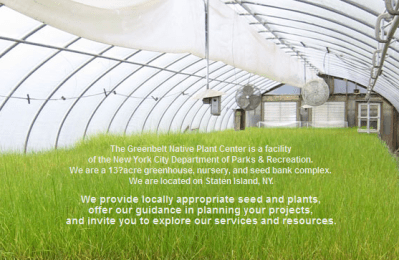
Ed Toth, Director of NYC Parks Dept. Native Plant Center on Staten Island, recently announced the hiring of a new seed collection coordinator:
I am very excited to introduce Jeannine Strenk, our first employee, who joined us this past week as Seed Collection Coordinator for the Mid Atlantic Regional Seed Bank. Jeannine joins us from the Chicago Botanic Garden/CLM internship program, where she assisted in coordinating and supervising the Seeds of Success program for the State of Wyoming. Jeannine will be responsible for overseeing all collection activities as well as working with us to develop the MARS-B program, particulary with collection training workshops, outreach, website development, etc.
CLICK HERE to learn more about the Greenbelt Native Plant Center.
Northeast Natural History Conference 2012 a Success
Posted April 19, 2012 by nyfloraCategories: Classes and Workshops, Natural History
There were many interesting student and professional talks and posters at this year’s conference. The venue had rooms close together which made switching from one to the other easy, especially since we didn’t have to walk in from the front.The biggest challenge was the PowerPoint clicker ergonomics when speakers hit the forward button when they wanted to hit the laser pointer button. When will projector companies ever figure that out?
For a list of the oral abstracts from the conference CLICK HERE.
For a list of the poster abstracts CLICK HERE.
NYFA judged the speakers for best poster, best student presentation and best overall presentation. We will announce them on an upcoming post. We look forward to 2013! – Steve Young.
New Phenology Apps Help Track Bloom Times and Global Warming
Posted April 9, 2012 by nyfloraCategories: Natural History, Plant Biology, Publications, Apps, and Websites
One way to track the change in climate is to record bloom times of plants over the years. There are three Smartphone apps that allow you to do this. One is called PhenoMap and it allows users to collect data using Flickr accounts. Another is called Natures Notebook and it allows users to record plant and animal life cycle events like migrations and plant phenology. You first have to register with the National Phenology Network. It is also available for Android phones. The third one is called Project BudBurst for Android (iPhone coming soon they say) and it also includes a game called Floracaching which is like geocaching but with plants! I would be interested if anyone plays this game and how it turns out. – Steve Young
The List of Plant ID Apps is Growing
Posted April 9, 2012 by nyfloraCategories: Plant Identification, Publications, Apps, and Websites
The list of iPhone and iPad apps for plant identification is now up to 45 on our blog post. Click Here to see the post and the list that includes apps from around the world. We don’t have enough money to download and review them all but some look pretty nice while others look thrown together. We couldn’t find any for the graminoids but they may be coming eventually.